
Conditions We Treat
Regenerative Medicine in the Treatment of Foot, Ankle & Lower Leg Conditions
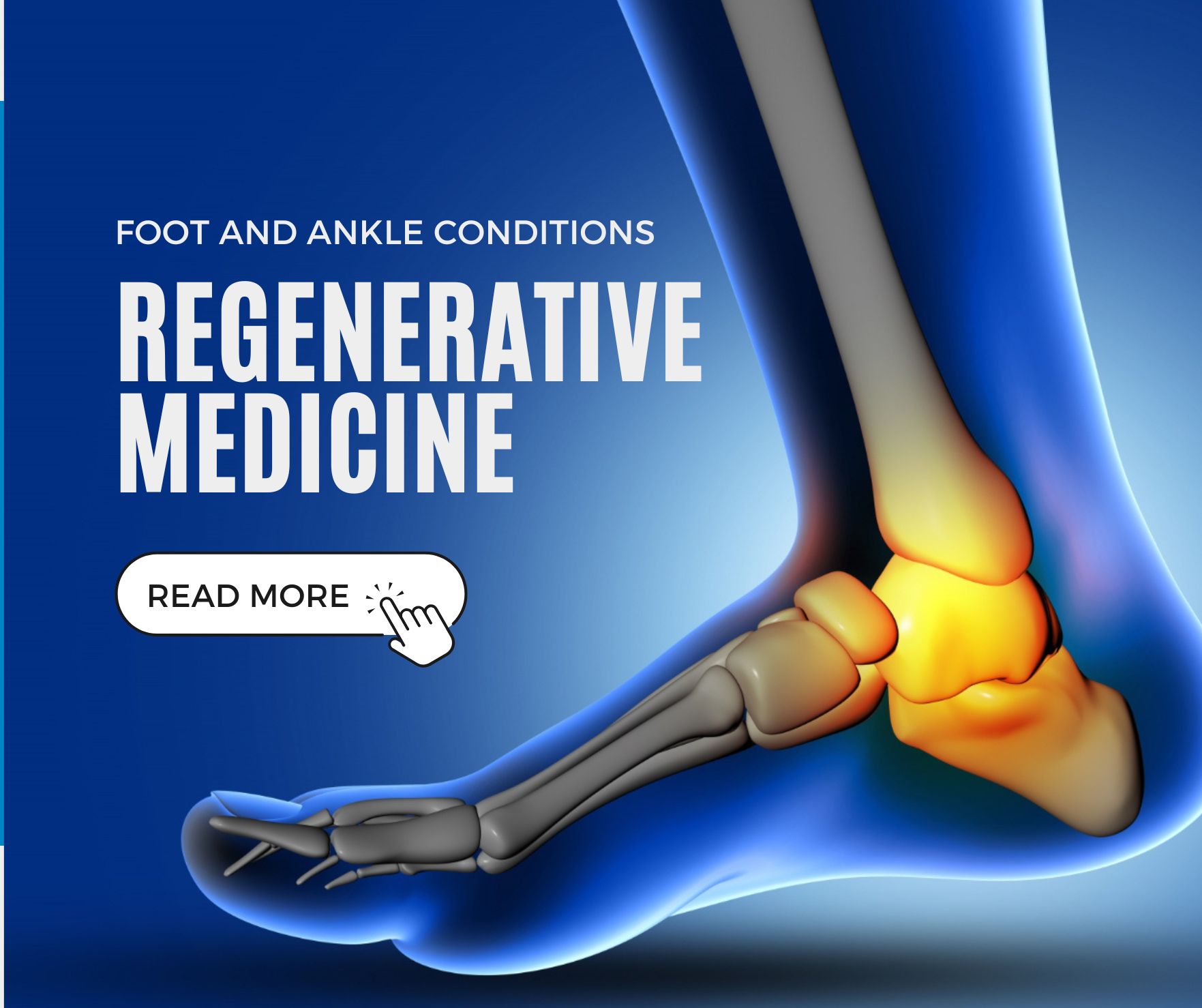
In the treatment of degenerative diseases and musculoskeletal injuries, especially those affecting the foot, ankle, and lower leg, regenerative medicine has shown great promise. Injuries including ligament sprains, tendinitis, plantar fasciitis, and arthritis are common in these areas and can seriously reduce mobility and quality of life. Regenerative therapies seek to restore tissue function by utilizing the body’s natural healing processes, while traditional treatments frequently depend on invasive operations or symptomatic management.
Biologic treatments, which promote tissue regeneration by releasing growth factors and cytokines, are at the heart of regenerative medicine. The use of platelet-rich plasma (PRP) therapy is one such approach. PRP is made from a patient’s own blood and has a high platelet content. Platelets release growth factors that encourage angiogenesis, tissue remodeling, and cell proliferation. PRP injections have been shown in clinical trials to lessen inflammation and hasten the healing process in tendon injuries and chronic inflammatory lower leg diseases. The utilization of mesenchymal stem cells (MSCs), which can differentiate into numerous cell types such osteoblasts, chondrocytes, and tenocytes, is another important development. MSCs offer a cellular basis for tissue regeneration; they are usually isolated from adipose tissue or bone marrow. By developing into the appropriate cell types, these cells not only aid in repair when injected into injured areas, but they also release bioactive chemicals that alter the local inflammatory milieu. In diseases like osteoarthritis and ligament injuries, this dual action serves to improve structural integrity and lessen pain.
An other cutting-edge treatment that incorporates aspects of MSC and PRP therapies is bone marrow aspirate concentrate (BMAC). By concentrating bone marrow, BMAC is produced, which allows a rich blend of growth factors and stem cells to be delivered straight to the site of injury. According to preliminary clinical results, BMAC may be especially useful in treating chronic degenerative changes in the ankle joint, giving patients more mobility and less discomfort without requiring more invasive surgical procedures. Alongside these treatments, peptide-based therapies are becoming more popular due to their ability to promote tissue regeneration. It has been demonstrated that some peptides increase angiogenesis and collagen synthesis, two processes essential for the healing of connective tissue damage. By combining these different regenerative techniques, doctors can customize treatment plans to meet the needs of each patient, promoting healing and possibly reducing recovery durations.
Notwithstanding the encouraging outcomes, more investigation is required to completely clarify the prospective hazards and long-term advantages of regeneration remedies. The best dosage schedules, administration methods, and the synergistic effects of combining various regeneration treatments are all being assessed in ongoing research trials. It is expected that these treatments will improve and be used more frequently in clinical settings as scientific knowledge grows.
In conclusion, by emphasizing tissue repair above symptom management, regenerative medicine offers a paradigm change in the treatment of lower extremity diseases. PRP, MSCs, BMAC, and peptide treatments are examples of novel techniques that have the potential to enhance patient outcomes, restore function, and lessen the need for invasive surgeries. Regenerative medicine has the potential to completely transform lower leg care in the future as research advances, giving patients with crippling musculoskeletal disorders fresh hope.
Next step
Have a question for RLE Institute?
A national institute of physician specialists (DPM) advancing non-surgical regenerative medicine for the foot, ankle and lower leg — stem cell therapy, exosome therapy, peptide therapy and combination treatments — to help people move better and live with less pain. Locations in Ohio, Chicago, Puerto Rico, South Carolina, South Dakota and California.
Get in touch