
platelet rich plasma prp therapy near me
PRP Therapy Near Me in Bayamón: How to Decide Whether a Consultation Is Worth Pursuing
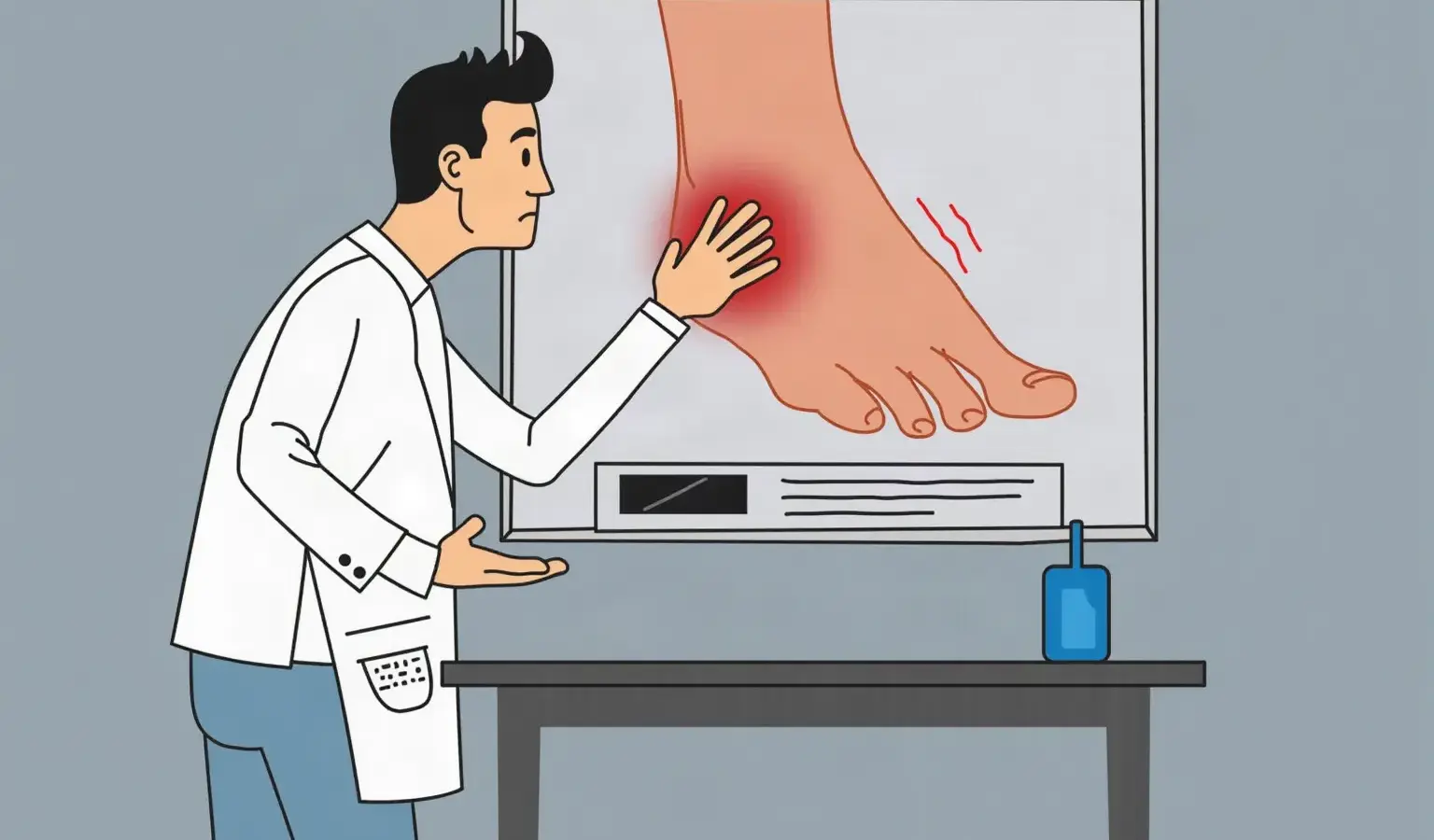
Start with the question your Bayamón PRP inquiry needs to answer
For an adult in Bayamón considering a PRP inquiry, the first task is to make the contact question clear. An inquiry is a way to discuss persistent lower-extremity pain; it is not a treatment commitment or a diagnosis.
The Regenerative Lower Extremity Institute lists locations in Ohio, Chicago, and Puerto Rico. That information does not confirm an appointment in Bayamón, availability for a particular person, or eligibility for PRP. It does establish why the location question belongs in the initial conversation: ask what contact and evaluation options apply to your circumstances rather than assuming that a listed location answers that question.
A concise inquiry can separate four kinds of information:
- where the pain is and how long it has affected you;
- which activities, work demands, or daily tasks it limits;
- what evaluation or care you have already had; and
- what you want the clinician to clarify before any treatment decision.
This summary keeps the contact focused without turning symptoms into a self-diagnosis. It also gives the clinician a starting point for explaining what needs to be evaluated and what other care should remain in view.
The most useful questions are about the problem being evaluated, the reason PRP is being discussed, the findings that support that discussion, the alternatives that remain available, and how follow-up would be handled. A response does not need to promise an outcome to be useful. It should make the proposed next conversation understandable.
The practical decision is therefore whether you have enough information to request a focused consultation inquiry and whether the resulting discussion answers the questions that matter. If the condition, proposed role, or next step remains unclear, keep the inquiry at the evaluation stage instead of treating contact as a decision to proceed.
Write a plain-language description of the PRP proposal
PRP therapy uses a sample of your own blood. The blood is processed to separate platelets and other healing factors, and the resulting solution is injected into an affected area. That description explains the procedure in plain language, but it does not identify the cause of pain or establish that PRP belongs in an individual care plan.
For a focused inquiry, translate the general description into questions about the proposal being discussed. Which condition or structure is being evaluated? What is the intended target? What role would the injection have in the broader plan? What would remain undecided after the consultation?
The proposed role matters as much as the procedure itself. A discussion about PRP should connect the injection with the condition under evaluation, the reason it is being considered, and the care that may accompany it. If the explanation stays at the level of general statements about healing factors, ask how it relates to the particular foot, ankle, tendon, ligament, or lower-leg concern.
You do not need to arrive with a diagnosis. A useful inquiry can state what you understand about the procedure while leaving the clinical assessment open. This prevents a treatment label from doing the work of an evaluation.
The inquiry can also ask the clinician to explain the proposed sequence: what would be evaluated first, what findings would lead the clinician to discuss PRP, what the injection would add, and how the next decision would be made. These questions keep the contact centered on understanding the proposal rather than assuming that a standard protocol applies.
One useful distinction is between the material being injected and the reason for considering it. The procedure description explains where the preparation comes from; it does not tell you whether the painful structure has been identified or whether the available evidence fits that condition. Ask the clinician to state those two parts separately. Also ask what information would make the proposal less appropriate. This makes it easier to recognize when a general explanation has not yet become an individualized recommendation.

Bring the condition question to the conversation
A focused PRP inquiry begins with an account of the problem rather than a conclusion about its cause. Some lower-extremity conditions are commonly recognized in primary care, while other ankle tendon injuries can be missed. Pain in a similar location can therefore lead to different evaluation questions.
Describe when the symptoms began, whether they followed an event or a change in activity, and how they affect walking, running, standing, work, or ordinary movement. These details do not diagnose the problem. They help the clinician decide what needs to be examined and which explanations should remain open.
Include the evaluation and care you have already received. If another clinician used a description such as a sprain, tendinopathy, plantar fasciitis, arthritis, or a different condition, bring that description into the conversation without assuming that it remains correct. Ask whether the current pattern fits it and what would lead the clinician to reconsider it.
This approach changes the purpose of the inquiry. Instead of asking only whether PRP is offered, you are asking what problem the proposed treatment would address and what information supports that assessment. If the proposed injection is described before the condition is clear, return to the evaluation question.
A useful response should identify the structure or condition under discussion, explain what supports that working view, and acknowledge what remains uncertain. Those details make it possible to decide whether a consultation should continue without treating a symptom label as a diagnosis.
The reason for this caution is that foot-and-ankle function involves energy absorption and transfer during propulsion, stability during stance, and proprioception. Abnormal mechanics can be associated with changes in connective tissue and muscle function. Those relationships make a location-based label an incomplete basis for treatment discussion; they do not, by themselves, identify the source of your pain. Ask what examination or assessment is being used to move from symptoms to a working diagnosis.
Use condition-specific findings as prompts, not conclusions
Evidence is most useful in an inquiry when it helps you ask whether the reviewed condition matches the problem being evaluated. A foot-and-ankle review discusses PRP in relation to plantar fasciitis and osteochondral lesions of the talus.
That information does not identify your condition or predict your result. It gives the consultation a more precise starting point. If one of those conditions is being considered, ask what evaluation established that possibility and whether the proposed preparation, injection approach, accompanying care, and follow-up resemble the circumstances discussed in the review.
A focused inquiry can distinguish three different statements: PRP has been studied for a condition; findings have been reported in reviewed clinical settings; and a clinician is recommending a plan for an individual. Those statements should not be treated as interchangeable.
If your concern is described only as ankle pain, a sports injury, or a lower-leg problem, ask why evidence from a more specific condition applies. A shared body region does not by itself establish the match. The useful answer should identify the condition being evaluated and explain which part of the evidence is relevant to that condition.
Use the reviewed findings to make the contact more specific, not to settle eligibility before an evaluation. The inquiry remains successful if it clarifies the condition-to-evidence connection and shows which questions still require a clinician’s explanation.
Evidence strength should also be read condition by condition. The clinical recommendations review reports insufficient evidence to routinely recommend PRP for high ankle sprains and reports a lack of efficacy for Achilles tendinopathy in the evidence it summarizes. This does not settle an individual case, but it is a reason not to transfer findings from plantar fasciitis or an osteochondral lesion to every tendon or ankle complaint. Ask which evidence category applies to the diagnosis being evaluated.
Mark what remains unresolved
A focused inquiry should make uncertainty visible instead of smoothing it over with a general treatment label. A foot-and-ankle review describes outcomes for ankle osteoarthritis as mixed and notes variation in PRP preparation and implementation. That does not answer what would happen in an individual case, but it identifies issues that belong in the consultation.
Ask which condition is being evaluated, what findings support that view, and how the proposed preparation relates to the evidence being discussed. Ask what part of the proposal is established, what part depends on clinical judgment, and what would remain unknown even after the conversation.
Uncertainty can concern the diagnosis, the relevance of the available findings, the way the proposed treatment would be carried out, or the follow-up plan. It can also concern individual safety considerations. Naming the point of uncertainty makes it easier to request a precise explanation instead of accepting a broad assurance.
For a Bayamón-area inquiry, write down the questions that remain unresolved before deciding whether to continue. A meaningful response should explain the condition-to-treatment connection, identify the alternatives still under consideration, and describe how the plan would be reviewed. If those points remain vague, the contact has not yet provided enough information for a treatment decision.
Mixed findings are neither an automatic rejection nor a reason to assume benefit. They are a signal to keep the discussion tied to the specific condition, proposed role, and follow-up rather than treating interest in PRP as evidence that it fits.
Mixed evidence can be turned into a decision checkpoint. Before treating the proposal as actionable, ask whether the uncertainty comes from the condition itself, differences in preparation, differences in implementation, or limited ability to apply reviewed findings to your circumstances. Then ask what information would reduce that uncertainty and what decision would remain if it could not be reduced. This keeps “mixed” from being mistaken for either proof of benefit or proof that discussion is pointless.

Keep provider statements separate from general evidence
These statements describe what we offer and how we characterize our PRP service.
Those statements should remain separate from independent clinical findings about PRP generally. The general findings do not automatically validate every provider statement for every condition, and our treatment list does not establish an outcome for your case.
That distinction gives you a direct way to evaluate a proposal. First, identify which statement is being made:
- Service scope: Is the condition among the problems we identify as treatment areas?
- Clinical rationale: What diagnosis and findings make PRP relevant to your problem?
- Expected role: Is PRP being offered as an addition to other care or as the central intervention?
- Uncertainty: Which parts of the recommendation are established, mixed, or still unclear?
You can ask us to explain how the service being offered connects with the condition-specific findings. You can also ask what would change the recommendation after an examination or review of your history. A direct answer should distinguish what we offer from what the broader clinical literature can reasonably establish.
This separation protects the meaning of both types of information. A provider’s statement tells you how that provider describes its service and treatment scope. An independent review tells you how the reviewed clinical findings are characterized. Neither statement, by itself, determines what should happen in your case.
When you contact us, ask for the proposal in concrete terms. Which condition is being evaluated? Is PRP the treatment being discussed for that condition, or is it one possible option? What other care remains under consideration? What information would be needed before the recommendation could be made more specific? These questions keep a service inquiry from becoming an assumption about eligibility.
You can also ask whether the proposed discussion is about PRP generally or about the particular problem being evaluated. The more specific the condition, the easier it is to compare the proposal with the relevant evidence and with other choices.
Define PRP’s place in the proposed plan
PRP therapy generally has an adjunctive role. It may be a helpful addition, but it should not be your only treatment. For an inquiry, that means asking what the proposed injection would add to the broader plan rather than treating contact with a provider as a choice to replace evaluation or other care.
The conversation should identify what would continue whether or not PRP were discussed, including any rehabilitation, activity guidance, monitoring, or other treatment decisions relevant to the condition. It should also explain what would happen if the expected change did not occur. These questions test whether the proposal has been described as part of a broader plan.
An adjunctive role also keeps the diagnosis question open. If the condition is uncertain, clarification comes before deciding how an injection might fit. If the condition is established, the inquiry can ask how PRP compares with the other reasonable choices for that condition.
The contact has done its job when you can describe what PRP is intended to add, what it would not replace, and which decision remains open after the consultation. If it is presented as the only meaningful path, ask what makes other options unsuitable for the condition under discussion. If it is presented as one component, ask how the components relate.
Because adjunctive care is not a stand-alone answer, ask what the plan would look like if the injection were removed from it. The provider should be able to describe the evaluation and other care that would still matter, without presenting PRP as the only route forward. This comparison is not a judgment against PRP; it is a way to identify its claimed contribution and avoid confusing an available option with a complete care plan. It also helps distinguish a treatment discussion from a decision to stop considering other appropriate care.
Set out the alternatives you want explained
An inquiry is more useful when it asks how PRP fits among the options for the condition rather than asking whether the injection is desirable in isolation. The available material describes other approaches for some tendon concerns, including injections, rehabilitation-oriented care, activity guidance, and surgery. Their presence on a list does not establish that any one option applies to you.
Ask the clinician to explain the purpose of each option being considered, what it would add or replace, what limitations are relevant, and how follow-up would be handled. This keeps the discussion tied to the condition instead of turning treatment names into a ranking.
The comparison should also include the option of continuing evaluation before choosing a treatment. Ask what information is still needed, whether another explanation for the symptoms remains open, and what would change the recommendation. A consultation can be worthwhile even when its immediate result is a clearer evaluation question rather than a treatment decision.
Use the same basic frame for each option: which problem is it meant to address, what role would it have, what other care would accompany it, and what uncertainty remains? The answers help you understand the decision without asking the provider to promise which path will produce a particular result.
A balanced inquiry leaves you able to explain why PRP is being discussed, which alternatives remain relevant, and what would need to be clarified before further treatment discussion.
To make that comparison concrete, use the same questions for every option: What condition is it intended to address? Is its purpose symptom relief, support for healing, evaluation, or another goal described by the clinician? What would it require from you in terms of follow-up or activity guidance? What uncertainty would remain? Asking the same questions prevents PRP from receiving a less demanding standard than other options and keeps the decision tied to the diagnosis rather than to the appeal of a treatment name.
What to confirm before a Bayamón PRP consultation
Before you submit a PRP inquiry in Bayamón, treat it as a way to verify the practical fit of a consultation—not as a commitment to treatment. Regenerative Lower Extremity Institute has a location in Bayamón, Puerto Rico. That location information does not confirm that an appointment is currently available, that a particular clinician will be involved, or that PRP is appropriate for your situation. Ask whether consultations are currently available in Bayamón and what the visit is intended to evaluate.
Prepare a short account of where the problem is, how long it has affected you, which activities or work demands it limits, what evaluation or care you have already tried, and what you want to discuss. Describe these details without assuming a diagnosis. You can also ask what information or prior records would help the clinician understand the concern.
Verify the exact service under discussion. Ask whether PRP is currently offered for the condition being evaluated, what the proposed service would involve, and whether it would be used alongside other care. PRP uses a sample of your own blood. The blood is processed to separate platelets and other healing factors, and the resulting solution is injected into the affected area.
Use the evidence as a question-setting tool. A foot-and-ankle review describes reported evidence for plantar fasciitis and osteochondral lesions of the talus, while ankle osteoarthritis outcomes are mixed and vary partly with preparation and implementation. Ask how the evidence applies to the exact condition under discussion; these findings do not determine individual eligibility or predict a personal result.
Before deciding what to do next, ask which safety considerations apply to your health history, what alternatives remain under consideration, whether PRP would be an adjunct rather than your only treatment, what follow-up would be used, and how uncertainty should affect expectations. There is still no large body of research on PRP, so a clear explanation of limits matters. Also ask what payment and coverage information you need to verify before making a treatment decision. If the location, service, condition, safety, follow-up, or payment questions remain unanswered, seek appropriate medical evaluation or another informed discussion.
Prepare the information a clinician will need
A consultation record gives you a way to describe the problem without turning your symptoms into a diagnosis. Some other ankle tendon injuries can be missed, so location alone may not identify the structure involved.
Prepare a short record with these details:
- Location: Mark the exact area, such as the heel, arch, ankle joint, Achilles region, side of the ankle, top of the foot, or lower leg. Note whether the pain spreads or stays in one place.
- Timing: Record when the problem began, whether it followed an injury or activity change, and whether it is constant or tied to particular movements.
- Activity effect: Describe what happens with walking, standing, running, jumping, stairs, work, or training. Note what you can no longer do comfortably.
- Changes over time: Write down whether symptoms are improving, worsening, recurring, or unchanged.
- Prior evaluation: Include any diagnosis you were given, examinations you have had, and imaging or other assessments you can describe accurately.
- Prior care: List treatments or activity changes you tried and what happened afterward. Do not assume that a lack of improvement proves a different diagnosis.
- Your goal: State what you want to discuss, such as returning to a sport, managing work demands, or making ordinary walking easier.
Bring questions about the proposed diagnosis, the role of PRP, alternatives, uncertainty, safety, follow-up, and payment. This record helps the conversation start with your actual pattern rather than with a generic treatment label.
Add the details that may change how the conversation proceeds:
- whether the problem began with a clear injury or developed gradually;
- whether the symptoms have returned after earlier improvement;
- whether a previous diagnosis was based on an examination, imaging, or another assessment;
- whether you have already discussed injections or other procedures; and
- what you want the consultation to clarify before you make any decision.
Keep the record factual and brief. Dates, locations, activities, prior evaluations, and your own description of change are more useful than trying to label the condition yourself. If you have records or reports that you understand, describe them accurately and bring them according to the provider’s instructions.
Prepare a separate question list so the appointment does not have to carry every concern from memory. Put the questions that determine whether you want to continue first: What is being evaluated? Why is PRP being considered? What alternatives apply? What uncertainty remains? What follow-up would be part of the plan? Payment questions can follow once you understand what is being proposed.
Your goal record can be especially specific for activity-related pain. Instead of writing only “return to sports,” note the activity you want to discuss, the movement that currently causes difficulty, and the level of participation you hope to consider. That gives the conversation a concrete purpose without turning the goal into a promised outcome.
For prior care, separate the name of the treatment from the response you observed. Note whether it changed pain, movement, or activity, and whether any change lasted or returned; if you do not know, say so. This does not prove why a treatment did or did not help. It gives the clinician a more accurate account of what has already been tried and prevents a broad treatment label from replacing the history. It also helps keep the consultation focused on what still needs to be evaluated.

Ask whether your diagnosis matches the proposal
A diagnosis-to-treatment question should be the first substantive part of a PRP consultation. Ask the provider to name the condition or structure being evaluated, explain how that conclusion was reached, and connect the proposed injection to that specific problem. This is especially useful because some lower-extremity conditions are commonly diagnosed while other ankle tendon injuries can be missed.
Use questions that require a condition-specific answer:
- What diagnosis or tissue problem are we evaluating?
- What findings support that working diagnosis?
- Could another tendon, ligament, joint, or nearby structure produce this pattern?
- Why is PRP being considered for this condition rather than another approach?
- What clinical findings apply to this exact problem?
- How would the recommendation change if the evaluation identified a different structure?
If plantar fasciitis is the working diagnosis, ask how the reported moderate high-quality support for PRP injection relates to your circumstances. If an osteochondral lesion of the talus is being considered, ask what established that possibility and how the reported pain and function findings apply. If ankle osteoarthritis is the concern, ask how the provider accounts for the mixed outcomes and variation in preparation and implementation described in a foot-and-ankle review.
These questions do not ask the provider to promise a result. They ask for the reasoning behind the proposal. Continue the conversation only after you understand what condition is being addressed and why PRP is being considered for it.
Ask the provider to separate what is known from what is being inferred. A finding may support a working diagnosis without answering whether PRP is appropriate. A treatment may have been studied for a condition without establishing that it is the right choice for every person with that condition. The consultation should explain the step from the evaluation to the proposal.
You can use this sequence if the explanation feels too general:
- “What structure or condition are you evaluating?”
- “What information supports that conclusion?”
- “What evidence relates to PRP for that exact condition?”
- “What makes the proposed plan relevant to my goals and history?”
- “What other options should I compare before deciding?”
A clear answer can still include uncertainty. The standard is not certainty about the future; it is a specific explanation of the condition, the evidence being relied on, the proposed role of PRP, and the alternatives that remain available. If the answers move between different conditions without explaining why, return to the first question and ask which condition is actually under discussion.
Ask what PRP would add and what it would not replace
The role of PRP in your plan should be explicit. PRP is generally offered as an adjunct therapy, meaning it may be a helpful addition but should not be your only treatment. Ask what the proposed addition is meant to do, what care would continue, and what other options should remain under consideration.
A focused consultation should answer questions such as:
- What part of the plan is PRP intended to address?
- What treatment or activity guidance would remain in place?
- What would happen if you chose not to proceed with PRP?
- Which alternatives fit the diagnosis, and what are their distinct purposes?
- What would make the provider change or withdraw the recommendation?
- How would follow-up determine whether the broader plan should continue, change, or stop?
If tendinitis is part of the discussion, ask what role the proposed options would have for your specific condition. That information does not make PRP automatically preferable. It gives you a reason to ask for a balanced discussion of purpose, limitations, and repeated treatment decisions.
Do not accept an adjunctive treatment as an unexplained replacement for diagnosis or other appropriate care. A clear plan identifies what PRP would add, what it would not replace, and how the next decision would be made.
Ask what would remain available if you decided to wait. This question does not assume that waiting is the right choice; it clarifies whether the proposed treatment is being presented as one option within a broader decision or as the only path under discussion. Ask what information you would gain by considering the alternatives and what information would still be needed.
If the plan includes rehabilitation or activity guidance, ask how that part relates to the condition being evaluated and how it would be followed. If the plan includes another injection or procedure, ask what distinct problem it is intended to address. If the plan includes no other care, ask why an adjunctive treatment is being discussed on its own.
You can write the answer in two columns:
- PRP would add: the proposed purpose and the condition it is intended to address.
- PRP would not replace: the evaluation, other care, alternatives, monitoring, and follow-up that remain relevant.
The exercise is useful because it exposes a vague proposal without requiring you to make a treatment decision on the spot. If the answers are specific, you can compare them with the condition-specific evidence and your goals. If they are not, pause and request a clearer explanation.
Ask about uncertainty, safety, and follow-up
A safety and follow-up discussion should answer what could change the plan before you decide. There is still no large body of research on PRP, so patients should moderate their expectations. The uncertainty described for ankle osteoarthritis also shows why the exact condition, preparation, implementation, and follow-up plan need to be discussed rather than assumed.
Ask the provider:
- Which parts of my medical history could change whether this is considered?
- What individual risks, precautions, or reasons to delay should I understand?
- What should I expect during the proposed process, and what information would I receive beforehand?
- What changes after treatment should prompt a call or another evaluation?
- How will you assess whether the plan is helping?
- What is the follow-up process if the expected change does not occur?
- What would lead you to recommend another approach instead?
These are questions, not a substitute for an individualized safety assessment. You do not need to decide from a general description of PRP. You need a provider to explain how the proposal relates to your history and what support will be available for decisions after the consultation.
Be cautious about any discussion that treats uncertainty as irrelevant or presents a standard result without explaining how your condition will be assessed. A clear answer can include limits. It can also explain what the provider knows, what remains uncertain, and how those limits affect your choice.
Ask for the practical follow-up details that affect your decision:
- Who would answer questions after the consultation?
- What event or finding would lead to another evaluation?
- How would progress be discussed in relation to your stated goal?
- What would happen if the proposed plan needed to change?
- Which parts of the plan would be reconsidered if the diagnosis changed?
These questions do not require the provider to predict a result. They ask how the decision would be managed when information changes or the expected course does not occur. That is particularly relevant when the evidence varies by condition or when preparation and implementation may differ across reviewed findings.
If you have a medical history detail that you think could matter, bring it up directly and ask how it affects the discussion. Do not rely on a general description of PRP to answer a question about your own circumstances. The relevant answer depends on the history and evaluation considered during the consultation.
Clarify payment and coverage separately
Payment and coverage are separate questions from whether PRP is clinically relevant. You should not assume that a provider’s availability of PRP means your health plan will cover it.
Ask for practical details before agreeing to a treatment plan:
- Is the proposed consultation covered under your applicable plan?
- Is the proposed PRP treatment covered, excluded, or subject to an individual medical-necessity decision?
- Which part of the proposed care could create an out-of-pocket charge?
- What payment information should you receive before treatment?
- Which questions should you direct to the provider and which should you direct to your health plan?
Keep the payment discussion distinct from the clinical discussion. A coverage decision does not establish that PRP is appropriate for your condition, and a coverage limitation does not by itself determine which care you should discuss. Ask for enough detail to understand the financial decision before you make the treatment decision.
Ask for the proposed service to be described clearly enough that you can discuss the same description with your health plan. If the plan requires an individual review, ask what information the plan uses and which part of the process is still unresolved. If the proposed care is not covered or the coverage answer is uncertain, ask what payment information you would need before making a decision.
Do not use cost or coverage as a substitute for the condition-to-treatment discussion. A low financial barrier does not establish clinical fit, and a coverage limitation does not answer whether another evaluation or treatment conversation is appropriate. Keep those decisions separate so that each one receives a direct answer.
The policy language available for this article comes from Providence Health Plan, so it should be treated as an example of why plan-specific verification matters, not as a rule for every insurer in Bayamón. Ask your own health plan how its coverage, exclusions, medical-necessity review, and treatment classifications apply to the proposed service. These details can vary by insurer and plan. Ask the provider to describe the proposed service in the same terms that you use with the health plan, and verify the answer before relying on it for a payment decision.
Decide whether the consultation answered the gating questions
A PRP consultation has answered the gating questions only when you understand the condition being evaluated, why PRP is being proposed for that condition, what the available clinical findings can and cannot establish, which alternatives remain open, and how follow-up will work. Mixed outcomes for ankle osteoarthritis, the adjunctive role of PRP, and the limited size of the broader research base all support a measured decision rather than an automatic yes or no.
Continue the treatment discussion when the proposal is specific, the condition-to-treatment connection is explained, the uncertainties are stated plainly, and the broader care plan makes sense to you. Pause when the diagnosis is unclear, the provider cannot explain why the evidence applies, alternatives are dismissed without discussion, or the expected result is presented as certain.
Use this final checklist:
- Do you know what condition or structure is being evaluated?
- Do you understand why PRP is being considered for that condition?
- Have you heard what evidence applies and where it remains mixed or limited?
- Do you know what PRP would add and what it would not replace?
- Have alternatives, follow-up, individual safety questions, and payment been addressed?
- Do you understand what question remains unanswered before any treatment decision?
A qualified clinician must decide whether PRP is suitable for your individual circumstances. Use appropriate medical evaluation for diagnosis and treatment decisions, and seek another informed discussion when the first conversation does not answer the questions that matter to you.
If several answers remain unclear, you do not need to turn that uncertainty into a treatment decision. Ask for clarification or seek another informed discussion. If the answers are specific and the remaining uncertainty is understandable to you, you can decide whether further conversation is warranted without treating that decision as a promise of outcome.
If your Bayamón-area questions are ready, discuss them with Regenerative Lower Extremity Institute through the consultation inquiry.
What should you ask before discussing PRP for lower-extremity pain?
What is platelet rich plasma prp therapy near me intended to treat?
PRP uses a sample of your own blood that is processed to separate platelets and other healing factors before the resulting solution is injected into an affected area. For lower-extremity concerns, it may be discussed in relation to conditions such as plantar fasciitis, tendon or ligament problems, and some foot or ankle conditions. The diagnosis and treatment rationale still need to be established in an individual evaluation.
Does PRP replace surgery or other treatment?
Usually, PRP is discussed as an adjunct rather than as the only treatment. It should not automatically be treated as a substitute for rehabilitation, activity guidance, other appropriate care, or surgery when surgery is relevant. Ask what PRP would add, what it would not replace, and which alternatives apply to the specific condition being evaluated.
How long does recovery take after a PRP injection?
A provider-specific recovery timeline is not established by the available information. Recovery and activity guidance can vary with the condition, its severity, individual health, and the broader plan of care. Before deciding, ask what activity changes, rehabilitation, monitoring, and follow-up would apply to your proposed treatment.
Does insurance cover PRP therapy in Bayamón?
Coverage cannot be assumed from the availability of a PRP service. Decisions depend on the applicable coverage agreement and may involve individualized determinations of medical necessity and whether the treatment is considered experimental or investigational. Ask both the provider and your health plan which services are covered and what out-of-pocket charges may apply.
Is PRP appropriate for everyone with foot or ankle pain?
No general article can determine individual eligibility. Foot or ankle pain may arise from different structures and conditions, and some ankle tendon injuries can be missed. A qualified clinician should evaluate the symptoms, prior care, relevant history, and possible diagnosis before discussing whether PRP is reasonable.
Free consultation
Find out whether regenerative treatment is right for you.
Most consultations begin as a telehealth call with a physician specialist, so you can start without travelling to a clinic. No referral needed.