
Condition
Metatarsalgia Treatment
Care for pain in the ball of the foot — starting with finding exactly which structure hurts.
About the condition
What metatarsalgia is
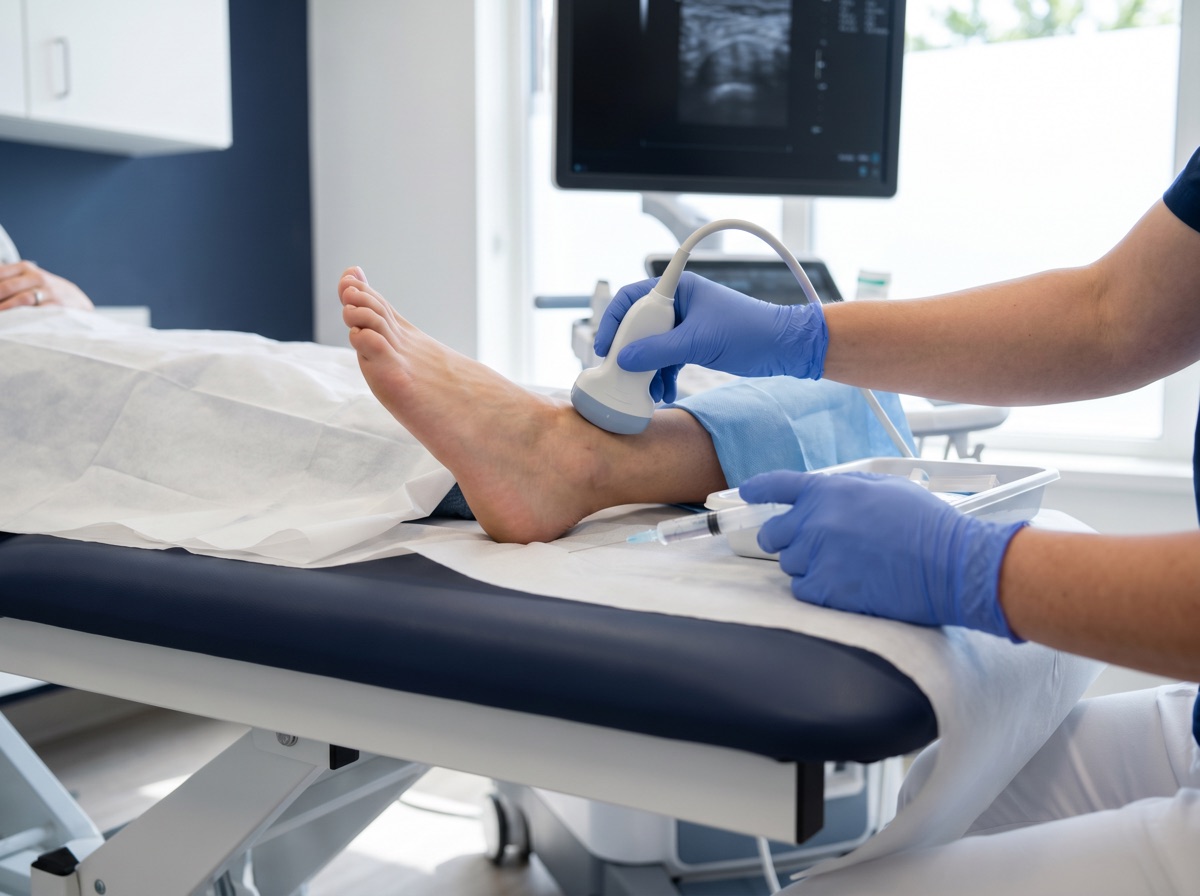
Symptoms
Common symptoms
- Aching, burning or sharp pain in the ball of the foot
- Pain that gets worse when standing, walking or running, and eases with rest
- A feeling of walking on a pebble or a bruise
- Pain that is worse barefoot on hard floors
Causes and usual care
Common contributors are high-impact activity, shoes with a high heel or a narrow toe box, foot shape — a high arch, a long second metatarsal, bunions or hammertoes — and extra load on the forefoot. Other problems cause pain in the same place and need to be ruled out, including a stress fracture, Morton’s neuroma and irritation of the joints at the base of the toes.
Most people improve with rest from high-impact activity, shoes with a wider toe box and good cushioning, a metatarsal pad and custom or off-the-shelf orthotics. Persistent pain calls for an exam and imaging to find the source.
Regenerative care
Where regenerative care may fit
- Ball-of-foot pain that has not settled with footwear changes, pads or orthotics
- Irritated or degenerated soft tissue around the joints at the ball of the foot
- People who want to treat the source rather than only cushion it
Not everyone is a candidate. Our physicians evaluate your condition and imaging before recommending any treatment.
When it is not the right answer
When the pain comes from a stress fracture, a neuroma or a foot-shape problem that needs correcting, the plan is different — your physician will tell you which applies.
Your options
Regenerative options we may use
Where we treat it
Our locations
Most consultations begin as a telehealth call, so you can start without travelling to a clinic.
Metatarsalgia — common questions
What causes pain in the ball of the foot?
Common causes are high-impact activity, tight or high-heeled shoes and foot shape. A stress fracture or Morton’s neuroma can cause pain in the same place, which is why a physician examines you and reviews any imaging before recommending treatment.
Do orthotics help metatarsalgia?
For many people, yes — a metatarsal pad or orthotic can take pressure off the ball of the foot. When pain persists despite them, your physician will look for the underlying source.
Do I need surgery?
Not necessarily. Our physicians specialize in non-surgical regenerative options and will only recommend surgery when it is truly the right answer.
Is the consultation free?
Yes. Your consultation is free, and you will get specific numbers for your own plan before you commit to anything. Most consultations begin as a telehealth call.
Does insurance cover regenerative treatment?
Regenerative treatments — stem cell therapy, exosome therapy, PRP, peptide therapy and BMAC — are not covered by insurance, and we do not bill insurance for them. Many patients use HSA or FSA funds where their plan allows it, and CareCredit and Affirm Pay-in-4 are available at checkout. See financing and our published prices.
Request an evaluation
Request your free consultation
Tell us what's going on and we'll call you back to arrange a time. Most consultations begin as a telehealth call, so you can start without travelling to a clinic. No referral needed.
Talk to a physician about metatarsalgia.
Speak with a physician specialist about your options — including when regenerative treatment is not the answer.