
anterior ankle sprain
Anterior Ankle Sprain: Symptoms, Recovery, Warning Signs, and When to Seek Evaluation
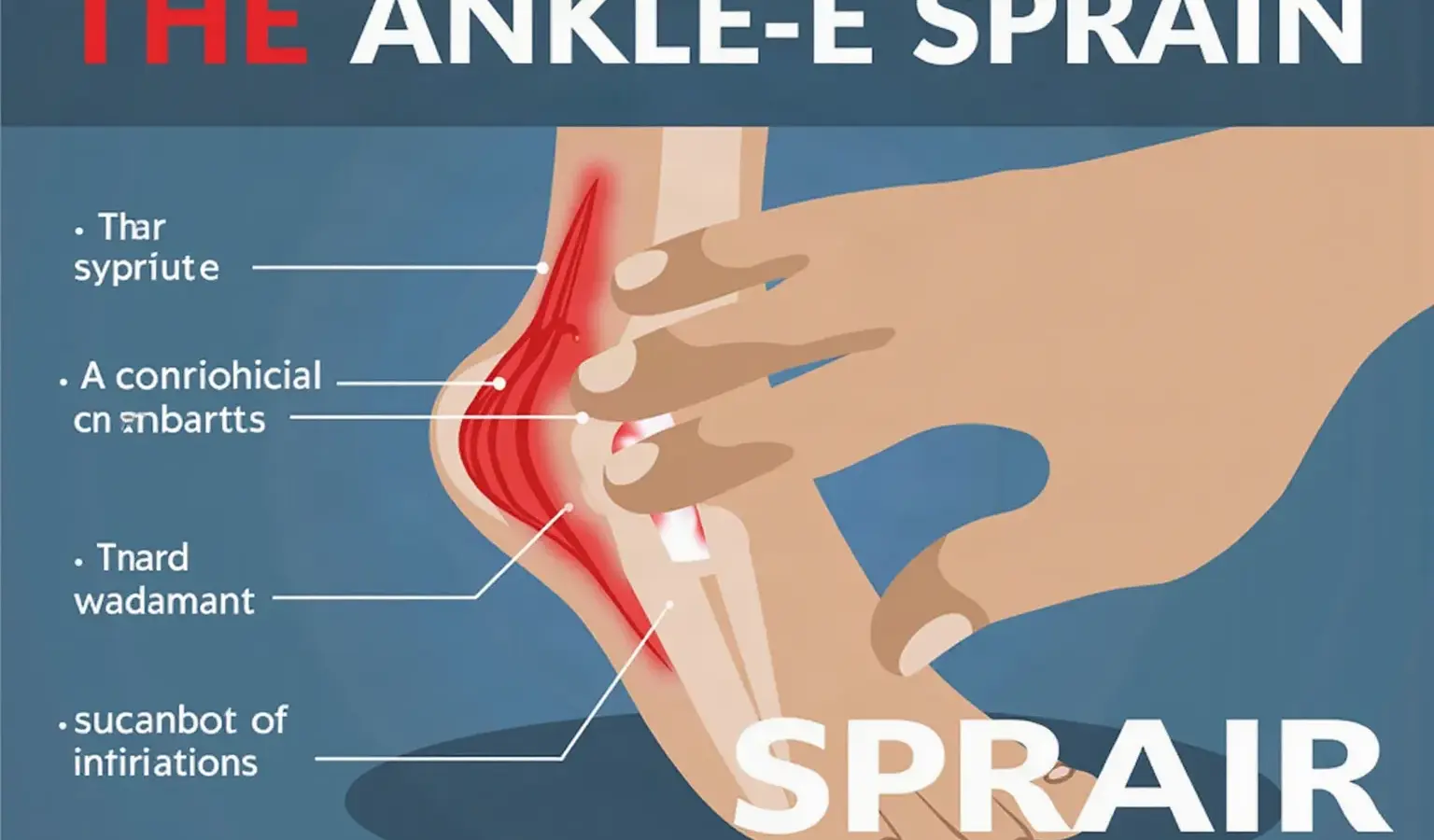
Start with the injury pattern, not a diagnosis
An ankle sprain occurs when a ligament connecting the ankle bones is stretched or torn, usually after the ankle turns inward. An injury on the outer and front side of the ankle often involves the anterior talofibular ligament, or ATFL, but the movement and symptoms do not establish the diagnosis by themselves.
The ATFL sits on the lateral side of the ankle, connecting the lateral malleolus to the neck of the talus. The ligament helps prevent the foot from sliding forward, and an inward-turning motion with the foot pointed downward can injure it. The ATFL is also the ankle ligament most commonly injured according to the cited clinical description.
Ankle-ligament injury can involve more than one movement pattern. Inversion, or turning the sole inward, is the most common mechanism. Eversion can affect the deltoid ligaments on the inner side of the ankle, while forceful upward bending of the ankle can affect the syndesmotic ligaments above the joint.
That distinction matters because pain in the same general area can arise from different injured structures. The direction of the original movement, the location of tenderness, the ability to bear weight, and the feeling of instability all give a clinician useful context, but none of those features alone confirms which ligament is injured.
Ankle sprains occur across sports and other active populations, but sports are not the only setting in which they happen. Half of ankle sprains treated in United States emergency departments reportedly did not occur during sport activity.
Your next step therefore does not depend on whether the injury happened during exercise. A misstep at home, a fall, or a turn on uneven ground can still leave you with symptoms that deserve attention, especially when walking, balance, or ankle stability remains affected.
Use symptoms and severity to understand what may be happening
An ATFL injury can cause pain and swelling around the ligament, while a broader ankle sprain may also produce bruising, tenderness, limited movement, painful walking, or a loose feeling. The combination and intensity of symptoms can suggest that the injury needs assessment, but symptoms do not tell you the exact grade or rule out another problem.
A clinical description may call the injury mild, moderate, or severe. More severe sprains generally take longer to recover. Grade labels are useful shorthand, not a substitute for an examination.
Ankle sprain grades are described differently across clinical sources, so the following ranges should be treated as reported patterns rather than promises about your recovery:
| Grade | Common description | Reported recovery range |
|---|---|---|
| Grade 1 | A stretched ligament with mild swelling and usually the ability to walk; some descriptions include tiny tears. | 1 to 2 weeks |
| Grade 2 | A partly torn ligament, painful walking, and an ankle that may feel somewhat loose. | 2 to 6 weeks |
| Grade 3 | A fully torn ligament with severe swelling and bruising; walking may be impossible at first. | 6 to 12 weeks or longer |
Descriptions of grade 1 and grade 2 injuries vary by source: they may be described as stretching with microscopic damage or as partial tearing, while grade 3 generally refers to a complete ligament tear. A clinical assessment is needed to determine the injury’s extent.
Recovery estimates describe groups of injuries, not an individual timetable. Being able to walk does not prove that the ligament has regained normal strength, and severe swelling or bruising does not identify every structure that may be involved.
Use the symptoms as a reason to organize an evaluation rather than as a self-diagnosis. Pay attention to whether weight-bearing becomes easier, whether movement returns, and whether the ankle continues to feel loose as the initial swelling settles.

Judge recovery by function as well as pain
Pain after an ankle sprain often decreases rapidly during the first 2 weeks and then improves more slowly. Pain can therefore give you an incomplete picture of recovery. Strength, balance, range of motion, and the ability to walk without instability also matter.
Some people continue to have residual symptoms after 3 years. That does not mean your ankle will follow that course, but it does give persistent swelling, restricted movement, recurrent giving-way, or repeated sprains a practical significance: improvement in pain alone does not settle whether function has returned.
Recovery after an acute ankle sprain is associated with several factors rather than a single symptom. Factors associated with poorer recovery include:
- Greater age
- More severe injury
- Difficulty bearing weight
- Swelling
- Restricted range of motion
- Ongoing pain
These associations do not establish your prognosis. They explain why two people with what seems like a similar twist can have different recovery paths and why persistent functional problems deserve more attention than a calendar estimate alone.
Chronic ankle instability develops in about 20% of people with an acute ankle sprain in the cited review. The review also links failure of functional rehabilitation after an acute sprain with chronic ankle instability..
Those figures describe study populations, not your likely result. A useful self-monitoring question is whether your ankle is becoming more capable and stable over time, not only whether it hurts less. Recurrent giving-way or difficulty returning to ordinary activities is a reason to arrange an assessment.
Use general early-care principles and progress rehabilitation
Early management for grade I or II sprains includes accurate diagnosis, rest, ice, compression, elevation, maintaining range of motion, and ankle support. For acute ankle sprains, functional treatment appears preferable to immobilization, although management is not completely standardized.
The practical point is to protect the ankle while preserving appropriate movement rather than assuming that complete stillness is always the goal. The right balance depends on the injury pattern, symptoms, and examination findings.
Ankle rehabilitation commonly progresses in stages. A general sequence includes:
- Regaining comfortable range of motion.
- Beginning strengthening after swelling and pain are controlled.
- Adding balance and proprioception work.
- Progressing to endurance and agility activities.
- Returning to sport-specific activity when that level of demand is appropriate.
Each stage addresses a different part of function. Range-of-motion work addresses stiffness, strengthening addresses the muscles that support the ankle, and balance work addresses control during standing and movement.
Therapeutic exercise has moderate supporting evidence for increasing range of motion and ankle strength during the first few weeks after grade I and II sprains. Early exercise improved short-term function compared with the rest, ice, compression, and elevation approach in the cited comparison, but the groups did not differ at later follow-up points.
That result supports a measured progression, not a race to load the ankle. Early movement should fit the injury and the level of pain and swelling, while worsening symptoms or difficulty bearing weight should move the question toward clinical assessment.
Incomplete rehabilitation is described as the most common cause of chronic ankle instability after a sprain. Stopping strengthening work can leave the injured ligaments and supporting muscles weaker and increase the risk of future sprains.
A short period of improvement is not the same as completed recovery. Keep function in view as rehabilitation progresses, particularly if the ankle still gives way, feels loose, or cannot tolerate ordinary walking and activity.

Understand what an ankle assessment can clarify
An ankle assessment can include observation, palpation, range-of-motion testing, and controlled stability testing. A clinician may compare the injured ankle with the other side, look for swelling or bruising, identify tenderness over the ligaments, and assess how the joint moves.
Those steps connect your symptom pattern with the structures that may be involved. Stability testing can also show why an ankle feels unreliable even when visible swelling has started to decrease.
Imaging is selected for the question being asked. A positive anterior drawer test suggests injury to the ATFL and calcaneofibular ligament, while X-rays can help rule out an avulsion fracture or other nearby bone damage. The Ottawa Ankle Rules remain valid for determining the need for X-rays, and MRI is reliable for detecting acute tears of the ATFL and calcaneofibular ligament.
MRI may be warranted when improvement has not occurred after 6 to 8 weeks of conservative medical management. MRI can show the degree of ligament injury and other soft-tissue damage, but the decision to obtain it belongs within an evaluation of your symptoms and examination.
Treatment discussions can include support, movement, rehabilitation, and further evaluation before surgery is considered. Surgery is reserved for injuries that do not respond to nonsurgical treatment and for ongoing instability and pain after months of rehabilitation and nonsurgical treatment. Surgery may also be recommended for some unstable high ankle sprains or associated cartilage or tendon injuries.
Chronic instability may require surgical intervention in some cases. Stability testing, including the varus stress test and anterior drawer test, is part of assessing that problem.
Questions for an ankle evaluation can keep the discussion focused on the actual problem. Consider asking:
- Which ligament or other structure appears to be involved?
- What does the examination show about movement and stability?
- Is an X-ray or MRI relevant to the question being evaluated?
- What type of support and rehabilitation progression fits the findings?
- What changes would indicate that the current plan needs reassessment?
These questions help you understand the reasoning behind the next step without treating a symptom pattern as a confirmed diagnosis.
Move from self-monitoring to prompt medical assessment when warning signs appear
Severe or worsening ankle symptoms call for prompt medical assessment rather than continued self-monitoring. Seek assessment if you have any of the following:
- Severe or worsening pain
- Inability to walk or bear weight
- Significant or rapidly increasing swelling
- Extensive bruising
- Deformity or an ankle that appears out of place
- Numbness, tingling, or pins-and-needles sensations
- A pop or snap at the time of injury
These signs do not identify the exact injury, but they raise the need to have the ankle examined.
A complete ligament tear is unlikely to heal properly without medical intervention and can lead to chronic instability, persistent pain, and increased risk of reinjury.
When you cannot bear weight, the ankle is rapidly swelling, or the joint feels markedly unstable, arrange prompt assessment. Do not use a temporary reduction in pain as proof that a complete tear or associated injury has been excluded.
Persistent instability or pain also changes the decision. An ankle that continues to give way after rehabilitation, remains difficult to load, or fails to improve along the expected course deserves reassessment so that ligament injury, cartilage injury, tendon injury, or another cause can be considered.
The supported action is simple: warning signs call for prompt assessment, while persistent functional problems call for a planned evaluation rather than indefinite monitoring.
Choose the next step for a clearer ankle evaluation
An ankle evaluation is a sensible next step when pain, swelling, instability, limited movement, or difficulty bearing weight does not follow a steady improvement pattern. Prompt assessment takes priority when severe or worsening symptoms, deformity, numbness, tingling, extensive bruising, rapid swelling, or a pop or snap is present.
A decision path can be brief:
- Match the injury movement and symptom pattern to the structures that may be involved.
- Treat grade descriptions and recovery ranges as general context, not a personal forecast.
- Track function, including walking, movement, balance, and stability, alongside pain.
- Use an examination to determine whether imaging or a different treatment discussion is appropriate.
- Reassess when symptoms persist, worsen, or interfere with ordinary activity.
Your evaluation will be more useful if you bring a clear account of what happened and what changed afterward. Write down the injury movement, the time symptoms began, where the ankle is tender, whether swelling or bruising changed, how much weight you can bear, and whether the ankle feels unstable.
Bring questions about examination, X-rays or MRI, support, rehabilitation, and the point at which persistent symptoms would change the plan. If you are considering a regenerative approach, ask whether it has a relevant evidence base for the specific injury and how it would fit with established evaluation and rehabilitation.
A qualified clinician must determine what is causing your symptoms and which options fit your findings. This article cannot establish a diagnosis, predict your recovery, or determine treatment suitability.
If you are near Westlake, Ohio, prepare your symptom timeline and questions before arranging an ankle discussion. A focused assessment can replace guesswork with a clearer understanding of the injury pattern, recovery needs, and next decision.
Questions to ask about an anterior ankle sprain
Can an anterior ankle sprain be diagnosed from symptoms alone?
No. Pain on the outer or front side of the ankle, swelling, bruising, limited movement, and instability can fit this pattern, but they can also occur with fractures, syndesmotic injuries, cartilage or tendon problems, and other conditions. An examination may include tenderness, range-of-motion, and stability testing, with imaging chosen when appropriate.
When should persistent ankle symptoms be reassessed?
Arrange a planned evaluation when pain, swelling, restricted movement, difficulty bearing weight, or a feeling of giving way does not steadily improve or continues to limit ordinary activity. MRI may be considered when improvement has not occurred after 6 to 8 weeks of conservative care, but the decision depends on the examination and the clinical question.
What should I bring to an ankle evaluation?
Note how the injury occurred, when symptoms began, where the ankle is tender, how swelling or bruising changed, how much weight you can bear, and whether the ankle feels unstable. Bring questions about examination findings, possible X-rays or MRI, support, rehabilitation, and what changes would require reassessment.
Are regenerative treatments established for every ankle sprain?
No. Stem cell, exosome, peptide, PRP, and BMAC treatments are not established or appropriate for every ankle sprain.
Free consultation
Find out whether regenerative treatment is right for you.
Most consultations begin as a telehealth call with a physician specialist, so you can start without travelling to a clinic. No referral needed.