
pump bump treatment
Pump Bump Treatment: Compare Nonsurgical and Surgical Options and Choose Your Next Step in Chicago
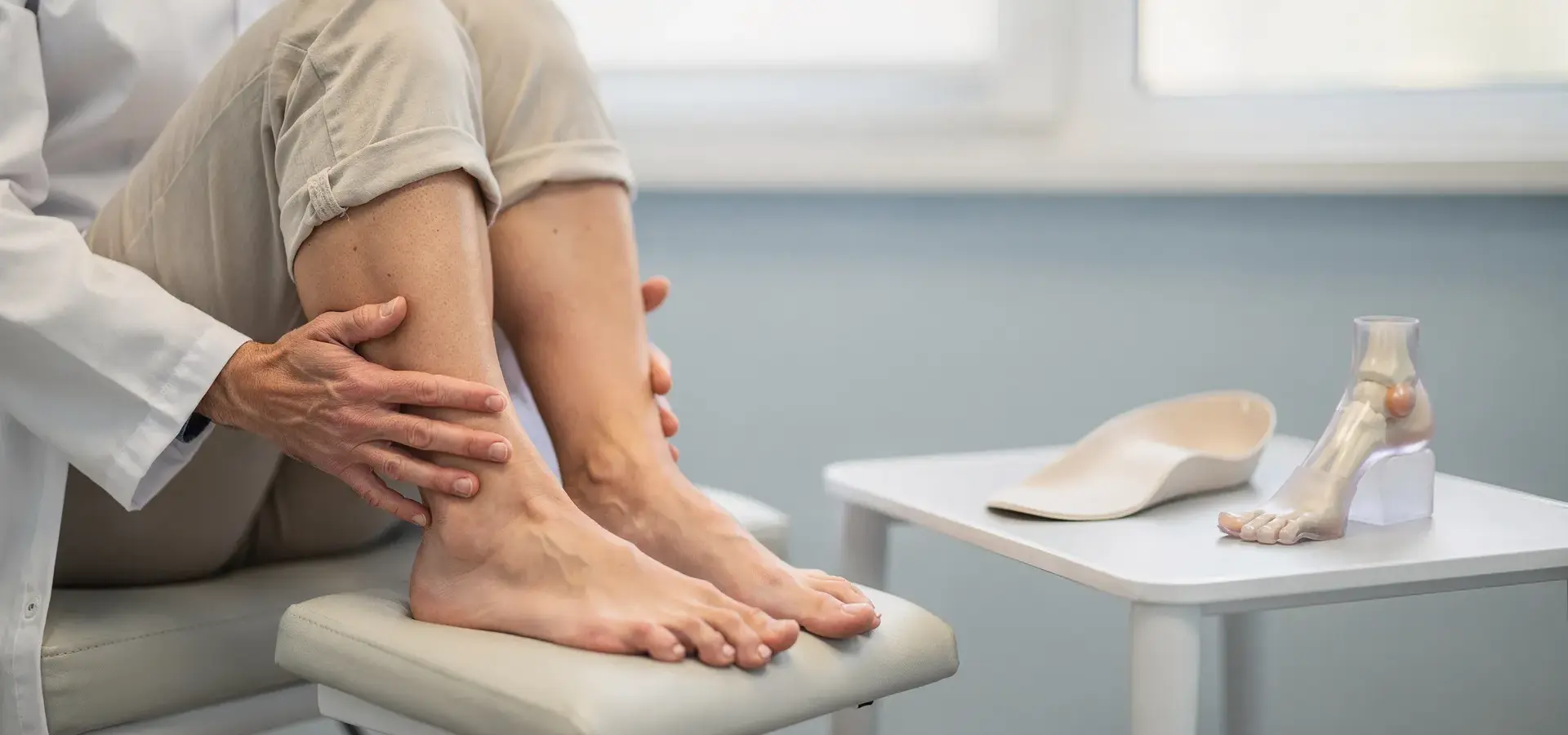
Separate the Heel Bump From the Pain It May Create
Pump bump treatment starts with separating the visible enlargement from the tissues that may be causing your pain. Haglund’s deformity, sometimes called a pump bump, is a bony enlargement at the back of the heel near the Achilles tendon attachment. The enlargement can sit beneath the soft tissue that rubs against the back of a shoe.
Pain from a heel bump may involve more than bone. Rigid or tight-backed shoes can irritate nearby soft tissue by rubbing against the enlargement, and the Achilles tendon or retrocalcaneal bursa may also be involved. Other causes of hindfoot pain can look similar, so a visible bump does not by itself confirm Haglund’s deformity. A qualified evaluation can help distinguish a bony prominence from Achilles tendon, bursa, or other heel problems.
A painful heel bump calls for pressure relief while you arrange the right level of assessment. If swelling is part of the problem, the cited guidance advises placing a thin towel between an ice pack and your skin for 20 minutes, then waiting at least 40 minutes before icing again. Ice may ease swelling, but it does not establish the cause of the bump or show whether the bony enlargement has changed.
Trace the Pressure and Activity Pattern
The symptom pattern around a heel bump can show which pressures deserve attention. Symptoms often develop gradually, although a sudden increase in activity may start them. Running and tight-fitting shoes may aggravate symptoms, while standing and walking can also increase discomfort. Pain at the back of the heel may be worse after rest.
Footwear can change how much the back of your heel is pressed or rubbed. Rigid backs, constrictive shoes, and pump-style shoes may irritate the area. Supportive, properly fitting footwear may reduce pressure, while soft-heeled or backless shoes may help some symptoms. Backless shoes have a trade-off: they can make your toes work harder and may contribute to hammertoes or other conditions, so they should not be treated as a universal answer.
A short symptom record can make this pattern easier to explain during an evaluation. Note when the pain began, whether activity changed shortly beforehand, which shoes touch the bump, whether standing or walking increases symptoms, and whether rest changes the pain. Also record swelling, tenderness, redness, limping, or difficulty taking a full stride. These details do not diagnose the condition, but they give a clinician a clearer starting point.
Begin With Pressure Relief and Measured Activity Changes
Initial treatment for posterior heel pain generally starts with nonsurgical care. The purpose is to reduce pressure and irritation, manage symptoms, and address the tendon or surrounding tissues without immediately operating on the heel. Conservative care may include several components rather than a single treatment. These options have different purposes, so a lack of response to one does not show that every nonsurgical option has failed. Shoe changes, heel lifts, and pads can reduce contact or pressure at the back of the heel; activity modification reduces repeated loading; physical therapy and stretching address movement and muscle-tendon demands; ice and anti-inflammatory medicines focus mainly on swelling or pain. The appropriate combination depends on whether symptoms are driven mainly by shoe contact, Achilles loading, bursal irritation, or another condition. A change that reduces pain during walking does not necessarily show that the underlying source has been corrected. Conversely, continued pain during a plan does not identify which component should be intensified without assessment. Reassessment is useful when a measure changes symptoms only briefly, creates a new problem, or does not improve walking or activity. A qualified professional can help decide whether to continue, modify, or stop a measure rather than treating every option as interchangeable. The goal is to match each measure to a documented symptom pattern and reassess function.
Nonsurgical care may include:
- Reducing or modifying the activity that aggravates your heel, particularly high-impact activity such as running.
- Choosing supportive, properly fitting shoes and considering soft-backed options when rigid shoe backs press on the area.
- Discussing heel lifts, a shoe with a moderate heel, heel pads, or orthoses with a qualified professional. A heel lift or moderate heel may reduce stress at the Achilles insertion, while barefoot walking or flat-soled shoes increase tension there.
- Using physical therapy to develop a personalized plan for stretching and strengthening the tendons and muscles of your feet, ankles, and calves.
- Considering calf stretching or other exercises only within a plan appropriate to the tissues involved.
- Using ice as directed in the cited guidance when swelling is part of the symptom pattern.
For Achilles tendinopathy, rest and time away from sport may be important, with return to exercise guided by pain and a clinician or physiotherapist. Prolonged complete rest may be worse for that injury, so avoiding activity indefinitely is not the same as measured activity modification.
Anti-inflammatory medicines require more caution than a simple list of options suggests. NSAIDs may reduce symptoms without addressing the underlying pathology. The cited handout notes that people with stomach problems may need precautions and that prolonged use was associated with elevated cardiovascular risk in that handout. Discuss whether a medicine is appropriate for you with a qualified healthcare professional, especially if you have relevant medical conditions or take other medicines.
Understand What Conservative Care Can and Cannot Change
Conservative pump bump treatment is aimed first at the pressure and tissue response around the heel. Haglund’s syndrome is often treated with changes to heel height in footwear, orthoses, physiotherapy, and anti-inflammatory drugs. Rest, limiting prolonged activity, supportive footwear, and icing may ease symptoms. These measures may make contact with shoes or loading of the Achilles tendon more tolerable. Symptom relief and structural change are separate outcomes: less rubbing may improve pain while the prominence remains, and persistent pain can still reflect ongoing irritation or another source of heel pain. An incomplete response is useful information to bring to a qualified evaluation, where the Achilles tendon, bursa, bone, and other possible sources can be reconsidered.
Activity should be adjusted rather than judged by a calendar alone. For Achilles tendinopathy, high-impact activities such as running are usually stopped initially, and exercise can be restarted as pain allows. A physical therapist can develop a plan to stretch and strengthen the feet, ankles, and calves; calf stretches and standing heel raises may reduce strain on the Achilles tendon and may reduce pain if the deformity rubs against it. Your response to the plan, your function, and the findings on examination matter more than assuming that every heel bump follows the same course.
Persistent symptoms change the question from “How can I calm this down?” to “What structure is still causing the problem?” Continued pain, swelling, tenderness, limping, or difficulty taking a full stride may mean that the Achilles tendon, bursa, bone, or another condition needs closer assessment. If pressure reduction does not restore useful function, arrange qualified evaluation rather than repeatedly escalating home measures on your own.
Know When Surgery Enters the Discussion
Surgery may enter the discussion when nonsurgical treatment does not provide adequate relief and symptoms remain significant after conservative care. The decision depends on the diagnosis, the tissues involved, the effect on your walking or activity, and what has already been tried. A systematic review says most authors prefer at least six months of conservative treatment before surgery.
The operation depends on the condition found around your heel. Depending on the extent of the problem, surgery may remove part of the bony prominence, an inflamed retrocalcaneal bursa, and an unhealthy piece of the Achilles tendon. The unhealthy tendon may be debrided before reattachment with anchors, and another tendon may sometimes be used to support strength and healing. The exact work depends on the condition found and the degree of tendon damage; it is not a single standardized operation for every painful heel bump. More extensive Achilles surgery may initially require immobilization; full weight-bearing may be restricted for the first six weeks, and strength improvement may continue for several months and take over one year.
Open and endoscopic surgery address the same general problem through different approaches, but the evidence does not make the choice automatic. The cited review reported complication rates of about 12.3% among the open-surgery group and 5.3% among the endoscopic-surgery group. Revision or repeat surgery rates were similar: 2.6% after open surgery versus 2.4% after endoscopic surgery.
| Decision factor | Open surgery | Endoscopic surgery |
|---|---|---|
| Findings from the cited review | Good functional and satisfaction outcomes were reported | Good functional and satisfaction outcomes were reported; the review gave the approach a grade C recommendation because high-quality evidence was lacking |
| Limits | Wound-related problems, nerve symptoms, stiffness, persistent pain, and Achilles injury remain possible | Evidence remains limited, and appropriate surgical skill is required |
| Repeat procedure rate | 2.6% in the reviewed comparison | 2.4% in the reviewed comparison |
The review found that both approaches can improve outcomes, but it did not establish a universally preferred approach. The choice should follow the clinical findings, the procedure required, and the surgeon’s explanation of recovery and risk. The comparison behind the reported rates included 50 heels in 44 patients followed for 22 months. Both groups had significant AOFAS score improvements, but postoperative endoscopic scores were numerically, not significantly, better than open scores. The study had limitations, including a small open-surgery sample that was not prospectively recruited. A lower rate in that comparison should therefore be read as a finding from those groups, not as a prediction of an individual result. The review also concluded that more studies are needed to validate and optimize these techniques. This uncertainty is relevant when discussing whether the possible benefits of an approach justify its recovery and risks.
Surgical risks deserve a direct conversation before you treat an operation as the next default step. Reported complications include persistent pain, wound problems, infection, nerve injury, stiffness, and Achilles tendon injury or rupture. Recovery can also limit weight-bearing and activity for a substantial period, particularly when the Achilles tendon needs extensive work. Ask which structures the proposed procedure would address, what restrictions apply, how rehabilitation will be organized, and what findings would change the plan. The cited surgical cohort had an average follow-up of 10.1 ± 12.9 months, and 1.8% of the total cohort underwent revision surgery. These figures describe that cohort and are not a prediction of an individual outcome.

Prepare for an Evaluation to Clarify the Diagnosis
A painful heel bump is evaluated through your history, a physical examination, and imaging when needed. During an assessment, a healthcare provider may ask about your symptoms, activities, and recent changes, examine the tendon, and use imaging to look for tissue changes. A foot-and-ankle surgeon may examine your foot and order X-rays to evaluate the heel bone’s structure. The examination is not limited to measuring the prominence. The clinician may consider whether the Achilles tendon, retrocalcaneal bursa, or another condition could be contributing to pain. Matching the symptom history, examination, and imaging helps distinguish a bony prominence with surrounding irritation from other causes of posterior heel pain.
Imaging can help assess Haglund’s syndrome while clinicians consider conditions that can resemble it. A lateral X-ray may show the bony prominence, calcaneal bursal swelling, or increased density in the bursae in front of the Achilles tendon; these findings may also be associated with a heel spur or heterotopic bone formation at or within the tendon. X-ray changes can add a clue, but there are no clear-cut radiological criteria for diagnosing Haglund’s lesion, especially early on. Ultrasound or MRI may sometimes be suggested when the diagnosis is unclear or for surgical planning. MRI can help show where heel pain is located, how extensive and severe it is, and what may be causing it. Imaging is interpreted with the history and examination rather than in isolation.
Bring a concise record so the evaluation can focus on the unresolved decision. Include:
- When the bump or pain first appeared and whether symptoms began after a sudden increase in activity.
- Which shoes, sports, work demands, standing, or walking make symptoms worse.
- Whether pain is worse after rest and whether swelling, tenderness, redness, limping, or difficulty taking a full stride has occurred.
- What you have tried, including activity changes, footwear changes, heel supports, physical therapy, ice, or medicines, and what changed afterward.
- Any prior imaging or treatment records that describe the Achilles tendon, bursa, heel bone, or another possible cause.
This information helps connect your symptoms to the examination and determine whether additional imaging is useful.
Act Urgently When the Pattern Changes
A heel bump that suddenly changes needs a different response from a stable, activity-related ache. Seek prompt medical care if the area is red, hot, very painful, draining pus, spreading, or accompanied by fever or chills. Warning signs also include increasing pain, warmth, thick yellow or green drainage, foul odor, or rapid enlargement.
Rapid swelling, difficulty moving the affected body part, or red streaks extending away from the lump require urgent evaluation. Do not wait for a routine heel-pain appointment when these signs are present; seek qualified medical care promptly.
Arrange Qualified Foot-and-Ankle Evaluation When Symptoms Persist
Persistent heel pain deserves qualified foot-and-ankle evaluation when it continues for months, worsens, limits walking or activity, or remains unexplained after pressure changes. Pain at the back of the heel may be worse after rest, and symptoms may include swelling, tenderness, occasional redness, limping, or difficulty taking a full stride. A visible bump does not by itself confirm Haglund’s deformity, and other heel conditions can require different treatment.
Surgical outcomes should be discussed with their uncertainty and complications attached. In a cohort of 390 surgical patients, reported complications included persistent pain in 10.3% of the 390 patients, wound breakdown in 8.2% of the 390 patients, infection in 1.8% of the 390 patients, plantar-flexion weakness in 1.5% of the 390 patients, and Achilles tendon rupture in 0.3% of the 390 patients. These figures describe that surgical cohort, not your personal risk, and they do not determine whether surgery is appropriate for you.
Use the evaluation to resolve specific questions rather than asking only whether the bump should be removed. Ask:
- Which structure appears to be generating the pain: bone, Achilles tendon, retrocalcaneal bursa, or another source?
- What did the examination and X-ray show, and would ultrasound or MRI add useful information?
- Which nonsurgical measures are reasonable for the findings, and how will function be reassessed?
- What symptom or functional change would make surgery worth discussing?
- If surgery is proposed, what would be removed or repaired, and what would recovery restrict?
For adults in or near Chicago, persistent, worsening, or function-limiting symptoms are a reason to arrange qualified evaluation rather than continue guessing at the diagnosis.

Use the Consultation to Choose the Next Treatment Path
The next treatment path should follow the tissue involved, the effect on your function, and your response to pressure-reducing care. If symptoms are manageable and the evaluation supports conservative treatment, continue the agreed footwear, activity, rehabilitation, and symptom-management plan with reassessment points. If symptoms remain significant despite conservative care, use the findings to weigh continued nonsurgical treatment against the recovery demands and risks of surgery. A qualified foot-and-ankle professional must decide individual suitability; no general description can make that decision for you.
Bring your symptom timeline, footwear and activity triggers, prior treatment response, imaging, and questions about recovery to the next step. That record can keep the discussion focused on whether the bump is the pain source, which tissues need attention, and what outcome you want to protect. Request the Chicago evaluation through the available form.
Questions to Ask Before Choosing Pump Bump Treatment
Does a pump bump go away without surgery?
Nonsurgical care may reduce irritation and pain. Surgery may be considered when symptoms remain significant after conservative treatment, but a qualified evaluation is needed before deciding whether an operation is appropriate.
How common is Haglund’s deformity, and who is more likely to develop it?
A reliable prevalence or incidence figure is not available. One review says it usually affects middle-aged people, is reported more often in females than males, and is often present on both sides; proposed contributors include a tight Achilles tendon, a high arch, and heredity. These patterns do not confirm the cause of an individual heel bump.
How much does pump bump treatment cost in Chicago?
No reliable Chicago- or U.S.-specific treatment-cost range is available.
Free consultation
Find out whether regenerative treatment is right for you.
Most consultations begin as a telehealth call with a physician specialist, so you can start without travelling to a clinic. No referral needed.