
Stem Cell Therapy
What Researchers Are Studying About Stem Cell Therapy for Joint Pain

Joints in the lower extremity absorb force with every step, relying on cartilage, ligaments, and synovial tissue to stay aligned and glide smoothly. When wear or injury disrupts that balance, inflammation can set in, and because cartilage has a limited blood supply, the body’s natural repair response often stalls. This is where researchers have turned their attention to regenerative approaches.
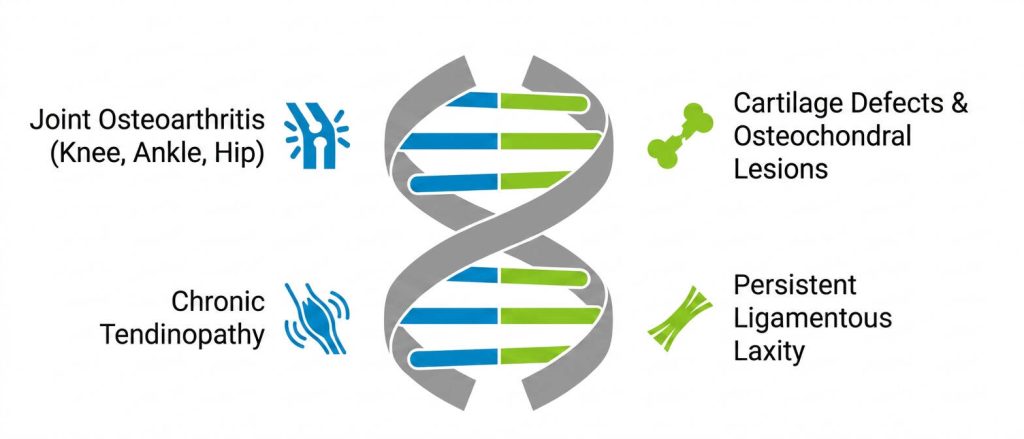
Stem Cell Therapy for Joint Pain in Ohio is currently being investigated in clinical settings for its potential relevance to joint osteoarthritis, cartilage defects, and chronic tendon or ligament concerns around the knee, ankle, and hip.
So what are scientists actually looking at? Clinical literature identifies a few mechanisms of interest. Research examines whether mesenchymal stem cells (MSCs) may differentiate into chondrocytes, the cells associated with the joint’s cartilage surface. Studies have also looked at how these cells may secrete bioactive factors that are theorized to shift a joint from a pro-inflammatory toward a pro-healing state. Preliminary papers suggest MSCs may support the production of Type I collagen, which is associated with the tensile strength of tendons and ligaments.
What sets this approach apart in the research is that the cells are described as environmentally responsive, able to sense inflammatory cues at the injury site and respond accordingly, rather than acting as a passive injection. The literature documents administration as a minimally invasive, image-guided injection, in contrast to the structural changes and longer recovery associated with joint fusion or replacement.
A few honest caveats. These therapies are not approved by regulatory authorities for wellness indications. Individual responses vary significantly, and any biological adaptation described in the research is gradual, typically framed across several weeks to months, not days. And it’s studied as part of a comprehensive care framework alongside rehabilitation and physician-directed care, not as a standalone fix.
If you’re navigating slow-healing joint concerns and want to understand how a regenerative approach is being researched, the Regenerative Lower Extremity Institute offers consultations across its Ohio, Chicago, South Carolina, South Dakota, and Puerto Rico locations.
References
Emadedin, M., et al. (2015). Long-term follow-up of intra-articular injection of autologous mesenchymal stem cells in patients with knee, ankle, and hip osteoarthritis. Archives of Iranian Medicine, 18(6), 336–344.
Murphy, M. B., Moncivais, K., & Caplan, A. I. (2013). Mesenchymal stem cells: Environmentally responsive therapeutics for regenerative medicine. Experimental & Molecular Medicine, 45(11), e54.
Wakitani, S., et al. (2011). Safety of autologous bone marrow-derived mesenchymal stem cell transplantation for cartilage repair in 41 patients with 45 joints followed for up to 11 years and 5 months. Journal of Tissue Engineering and Regenerative Medicine, 5(2), 146–150.
Pittenger, M. F., et al. (1999). Multilineage potential of adult human mesenchymal stem cells. Science, 284(5411), 143–147.
Next step
Have a question for RLE Institute?
A national institute of physician specialists (DPM) advancing non-surgical regenerative medicine for the foot, ankle and lower leg — stem cell therapy, exosome therapy, PRP, peptide therapy, BMAC and combination treatments — to help people move better and live with less pain. Locations in Ohio, Chicago, Puerto Rico, South Carolina and South Dakota.
Get in touch