
sore ankle without injury
Sore Ankle Without Injury: How to Choose the Next Step

Three pattern questions when no injury comes to mind
A sore ankle without injury is a starting fact, not a diagnosis. You may not remember twisting, falling, or striking the joint, yet soreness can still follow overuse, repetitive strain, a change in activity, footwear, arthritis, gout, or a tendon problem. Pain can also occur when imaging does not show detectable damage, so the absence of a remembered injury does not tell you exactly what is happening.
That uncertainty can be frustrating, especially when soreness affects walking, exercise, work, or sleep. It also changes the question you need to answer. Instead of trying to name the condition from one symptom, compare three pattern questions: did activity or footwear change, are joint or inflammatory features such as stiffness, swelling, warmth, or redness present, and are there clues beyond the ankle, such as numbness or calf swelling? Also note when the pain began, where you feel it, and whether you can bear weight.
Ankle soreness that appears suddenly deserves attention even when no injury comes to mind. Several different problems can produce similar discomfort, and symptoms alone cannot identify the cause. Treat the missing injury history as one piece of information, not as reassurance that the problem is minor.
These questions organize the pattern without naming a condition. Use the comparison to record what changed, what feels different, and whether anything beyond the ankle has changed before speaking with a clinician..
The no-injury symptom record: what changed first and what changed next
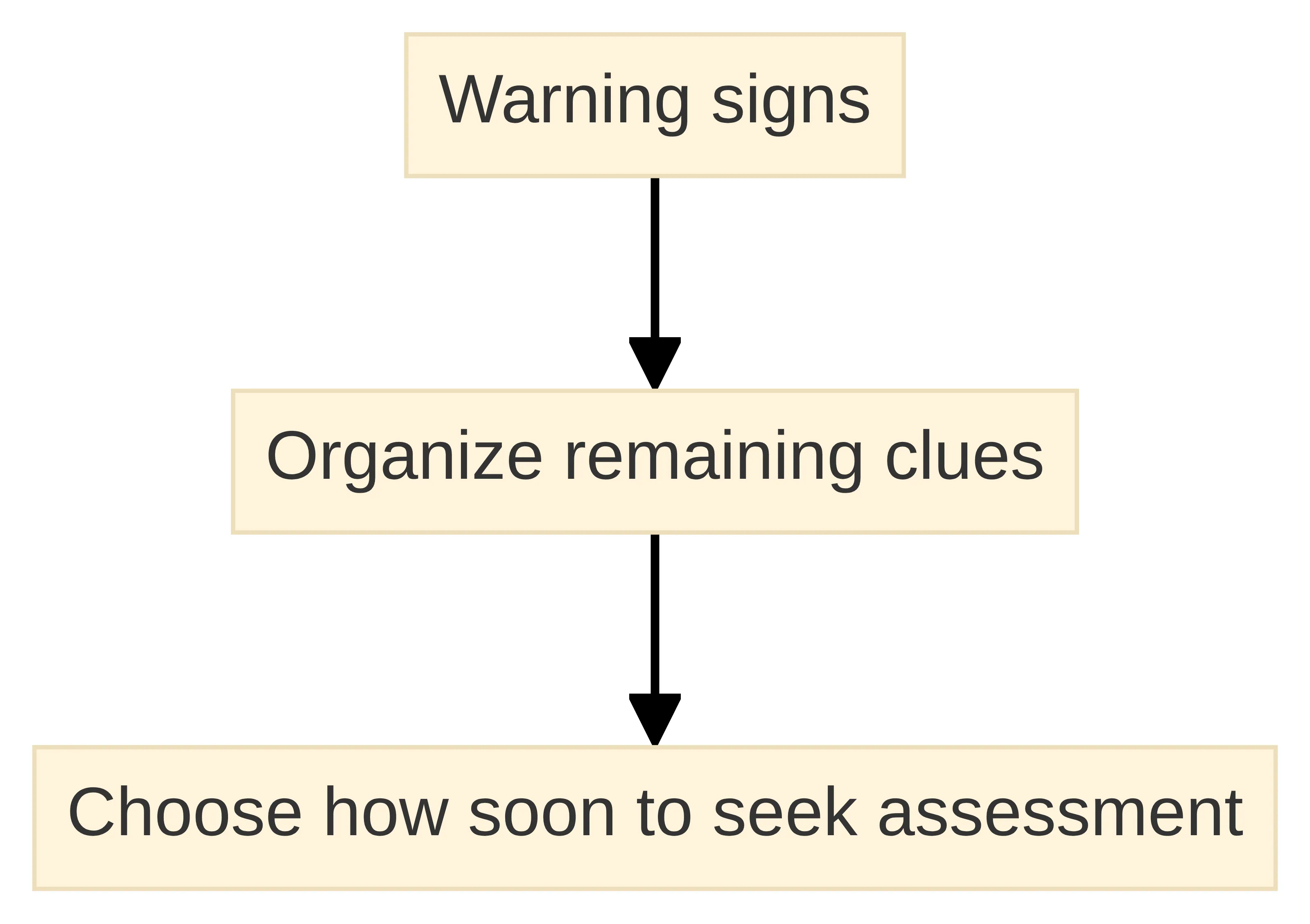
A next-step decision for ankle soreness becomes clearer when you sort the pattern into three questions:
- Is there a warning sign? A new deformity, an open wound, spreading redness, warmth, drainage, fever, new numbness, unusual coldness, or pale or bluish toes can change the timing of care. Calf swelling with ankle or foot pain also warrants urgent assessment, particularly after travel, surgery, or prolonged rest.
- What pattern may be contributing? Activity changes, repetitive strain, tendon symptoms, joint stiffness, swelling, inflammatory conditions, gout, infection, nerve symptoms, and problems higher in the leg are different questions. None can be confirmed from soreness alone.
- How is the problem behaving? Sudden onset, worsening symptoms, recurrence, persistence, and changes in walking function all add information. A symptom record can help you explain the pattern without turning it into a self-diagnosis.
This sequence keeps safety ahead of speculation.
Read these patterns as combinations, not labels. Soreness after repetitive strain can raise a tendon question, while stiffness after inactivity can raise a joint question. Warmth, redness, drainage, or fever changes the safety question, and calf swelling, color change, or altered sensation means the rest of the leg deserves attention too. These observations can overlap, and one feature does not settle the cause. The practical value of the sequence is to keep a possible explanation from eclipsing a warning sign. It also keeps a warning sign from being mistaken for a diagnosis: the sign affects how promptly to seek care, while evaluation is needed to determine what it means.
A useful comparison includes both the first change and the direction of change. Note whether symptoms began suddenly or gradually, whether they are stable or worsening, and whether walking or weight-bearing has changed. Record whether the ankle is swollen, warm, red, stiff after inactivity, or associated with numbness, tingling, fever, or symptoms in the calf. Location matters as well: discomfort may remain near the ankle or extend into the foot, calf, or area behind the knee. This information gives a clinician a clearer account without requiring you to decide which condition is responsible.
Foot-and-ankle pain does not always correspond neatly with what a scan shows. Pain can occur without detectable damage, and X-rays or scans may not reveal its cause. A normal-looking image would not automatically explain away ongoing soreness, while a symptom pattern still would not establish a diagnosis by itself.
That creates three separate questions that are easy to collapse into one. The first is the event question: did you notice a twist, fall, blow, or other single incident? The second is the structure question: is there a detectable change in a joint, tendon, bone, nerve, or surrounding tissue? The third is the timing question: do the current symptoms contain a warning sign that changes how quickly care is needed? A “no” to the event question does not answer the structure question, and an inconclusive scan does not answer the timing question.
For an atraumatic sore ankle, keep those questions in separate lines when you describe the problem. “I do not recall an injury” is a history detail. “The soreness is worsening” or “I cannot bear weight” describes current function and urgency. “The imaging did not show a cause” describes what one assessment did not establish. None of those statements needs to be converted into a diagnosis. This separation is useful when the symptoms are real but the explanation remains uncertain: it preserves the reason to seek assessment without claiming that a hidden injury, arthritis, tendon disorder, gout, infection, or nerve problem is present.
Ankle soreness can affect you whether you live near Westlake, elsewhere in Ohio, Chicago, or another service area. Your location does not change the warning signs. Use the same symptom-based timing questions wherever you are, and choose an appropriate local healthcare professional when the pattern calls for assessment.
First separate danger from diagnostic uncertainty
Warning signs are more useful for deciding timing than for naming a condition. A sore ankle with one of the following patterns deserves prompt medical attention:
- Sudden severe pain combined with an inability to bear weight.
- A new deformity or concern that a bone may be broken.
- An open wound, heavy bleeding, or bone visible through the skin.
- Spreading redness, warmth, drainage, or fever with the ankle symptoms.
- New numbness or tingling, pale or bluish toes, or unusual coldness.
- Calf swelling together with foot or ankle pain, especially after travel, surgery, or prolonged rest.
An open wound needs urgent medical attention. Infection-related signs, circulation or nerve changes, and severe loss of function also should not be handled as a routine wait-and-see problem.
Diabetes changes the threshold for concern when a foot injury or wound is present. Reduced sensation and slower healing can increase risk, so prompt evaluation is appropriate rather than waiting for the area to become more painful.
A missing injury history does not cancel warning signs. If a concerning change is present, act on the sign itself instead of waiting for a clear explanation. Symptoms can overlap, and their appearance does not allow you to determine the exact cause at home.
What may have changed even when nothing was injured
An ankle can become sore after its workload changes without a single event that feels like an injury. Overuse or repetitive strain can affect the tendons around the ankle and cause ankle pain. Chronic tendinopathy, tendonitis, and tendinosis are described as overuse or repetitive-strain problems that can cause ankle pain.
A change in activity can matter even when you consider it ordinary. Returning to exercise after a period of lower activity, adding hills to a walk, or spending more time on your feet may provide useful context without proving the cause.
Footwear can also be part of the recent context. A change in shoes does not prove that footwear caused your symptoms, but it belongs in the history you bring to an evaluation. The same is true of the activity you were doing while wearing those shoes. Timing can suggest a question without answering it.
An activity-related ankle pattern becomes easier to describe when you ask what changed before the soreness appeared:
- Did your walking distance, pace, hills, running, jumping, or standing time change?
- Did the soreness begin during the activity, later that day, or after a period of rest?
- Is the discomfort concentrated near a tendon, around the joint, or spread across the ankle?
- Does the ankle look swollen, feel warm, or remain sore when you are not using it?
- Does the same activity bring the soreness back?
These questions organize the story; they do not identify a tendon disorder or another diagnosis. A sudden change in activity can be relevant even when you cannot point to a moment of injury.
Overuse is not the only mechanical possibility. An activity-related symptom pattern still needs evaluation if it becomes more painful, keeps returning, limits weight-bearing, or appears with swelling, warmth, redness, numbness, or fever. Use the pattern to decide what to report, not to rule out other causes.
When the joint itself is the leading question
Ankle-joint conditions can produce soreness without a new injury. Arthritis may involve pain, swelling, and changes in cartilage or inflammation. Osteoarthritis is a chronic condition in which joint cartilage breaks down, potentially causing stiffness, pain, and reduced movement. Rheumatoid arthritis, post-traumatic arthritis, and gout are among the possible forms or contributors described for ankle symptoms.
A prior injury may still matter even if the current soreness began later. Post-traumatic arthritis is one possible form of ankle arthritis, so include old sprains, fractures, or other significant ankle problems in the history you give a clinician. If there was never a known injury, say that plainly; the absence of that history narrows the story but does not identify the cause.
Stiffness or soreness that is worse after inactivity, including in the morning, can occur with ankle arthritis and may ease somewhat as you move. That pattern is worth recording, especially if it repeats across several mornings or follows periods of sitting. A temporary improvement with movement does not settle the diagnosis, and it should not outweigh warning signs such as marked swelling, warmth, fever, or difficulty bearing weight.
Joint-related ankle soreness may be felt where the ankle and lower leg meet, but location alone cannot establish osteoarthritis or another form of arthritis. Note whether the discomfort is inside the joint, around the ankle, near a tendon, or extending into the foot. Describe reduced movement or swelling as observations rather than conclusions.
A joint symptom pattern can point toward a useful clinical question without settling the answer. Arthritis, tendon problems, inflammatory conditions, and other causes can overlap in how they feel. If the soreness persists, recurs, or changes your function, arrange an evaluation rather than relying on pattern matching alone.
When inflammation, infection, or gout changes the timing
Inflammation, infection, and gout can make ankle soreness a timing question rather than a problem to observe casually. Inflammatory conditions such as rheumatoid arthritis or lupus can contribute to ankle pain or swelling. Gout may cause intense pain and swelling. Infection can also contribute to ankle pain or swelling and requires particular caution.
These categories can overlap, so their presence does not identify the cause. An episode with warmth, spreading redness, drainage, or fever belongs in a prompt-assessment question even when pain is not the most noticeable symptom. An episode with intense pain and swelling may fit the pattern described for gout, but that pattern does not establish gout. Inflammatory conditions can also produce pain, swelling, or stiffness without providing a diagnosis from symptoms alone.
The useful record is specific rather than interpretive: when the soreness began, how quickly it changed, whether the skin became red or warm, whether swelling appeared, and whether fever or symptoms elsewhere accompanied the ankle symptoms. A remembered change in diet or activity may be part of the history, but it does not settle whether gout, inflammation, infection, or another problem is involved. When warning features are present, the timing of assessment matters more than trying to sort the categories at home.
Redness, warmth, drainage, or fever are especially important details when ankle symptoms appear. Spreading redness, warmth, drainage, or fever with foot or ankle symptoms can signal infection and warrants prompt medical assessment. The absence of a remembered injury does not make those signs less relevant.
Gout can be felt in the foot or ankle and may cause intense symptoms, while inflammatory joint conditions may appear as pain, swelling, or stiffness. Recent diet or activity changes may be useful context, but they do not confirm gout or another inflammatory condition. Record when the soreness began, how quickly it changed, whether the skin became red or warm, and whether you had fever or symptoms elsewhere.
Inflammatory or infectious features change the next action because symptoms alone cannot safely separate the possibilities. Do not wait for a remembered injury before seeking assessment when warmth, spreading redness, drainage, fever, marked swelling, or rapidly worsening pain is present.
When the ankle may be signaling beyond the joint
Pain felt at the ankle can sometimes reflect a problem higher in the leg rather than a condition limited to the ankle joint. A nerve problem anywhere in the leg can sometimes be felt as ankle pain. A blood clot in the leg can also cause ankle pain, often along with swelling or pain elsewhere in the leg, such as behind the knee.
Calf swelling with foot or ankle pain is a distinct warning pattern. The concern is higher after travel, surgery, or prolonged rest, and that combination warrants urgent assessment to rule out a blood clot. Do not use the location of the pain to assume that the ankle is the only area that needs attention.
Numbness or tingling, pale or bluish toes, or unusual coldness can indicate a nerve or circulation problem and warrants prompt evaluation. These changes matter even if the ankle itself is not very swollen. A new change in sensation or color is a reason to act on the symptom, not to wait for pain to become severe.
A wider symptom map can make the history more useful. Note the ankle, calf, area behind the knee, foot, and any change in sensation or color. Include whether one leg is affected or whether similar symptoms occur on both sides. These observations do not diagnose a clot or nerve problem, but they prevent a narrow focus on the sore spot from hiding a pattern that needs more prompt attention.
Walking ability and progression decide how quickly to act
Walking ability is one useful urgency clue, but it is not a diagnosis. Sudden severe foot or ankle pain combined with an inability to bear weight warrants prompt evaluation and may require diagnostic imaging. Severe or worsening pain, substantial swelling, or bruising also warrants medical assessment when a significant injury is possible, because symptoms alone may not distinguish a fracture from a sprain or bruise.
The ability to walk does not prove that every serious problem has been excluded. Some broken bones still allow weight-bearing, and worsening or persistent pain should be assessed. In your situation, consider the full pattern: how much you can walk, whether each step makes the pain worse, whether swelling or bruising is increasing, and whether the symptoms are changing rather than settling.
Progression matters even when the first symptom seems manageable. A sore ankle that becomes more painful, starts limiting ordinary walking, develops swelling or warmth, or begins affecting the rest of the leg should move from passive observation toward clinical assessment. Sudden onset also deserves attention when the reason remains unclear, because several conditions can create similar symptoms.
Walking function and symptom progression create a practical timing boundary:
- Unable to bear weight with sudden severe pain: seek prompt evaluation.
- Pain that is worsening or accompanied by substantial swelling, bruising, or another warning sign: arrange medical assessment promptly.
- Mild soreness without warning signs: record the pattern and monitor for change while deciding whether persistence or recurrence calls for an evaluation.
These categories organize timing. They do not determine the underlying condition.
What can be reasonable while uncertainty remains
General monitoring can be reasonable when the soreness is mild, no warning signs are present, and your ability to function has not changed sharply. Monitoring should be active rather than vague. Write down the onset, location, severity, activity before the symptoms, swelling, warmth, redness, stiffness, sensation changes, fever, and ability to bear weight.
Movement and exercise are not inherently harmful to foot and ankle joints, and activity can be built gradually to support strength. That general statement is not an individualized exercise prescription. If a particular activity clearly increases pain or changes your ability to walk, record that response and do not treat the activity as a test that proves the cause.
A symptom record can include:
- When the soreness began and whether the onset was sudden or gradual.
- The exact location, including whether pain is at the joint, near a tendon, in the foot, or higher in the leg.
- What happened before it began, such as more walking, running, jumping, standing, a footwear change, or a return to activity.
- Whether the ankle is swollen, warm, red, stiff after inactivity, or painful at rest.
- Whether you can bear weight normally and whether the pattern is improving, stable, worsening, or recurring.
- Any numbness, tingling, color change, unusual coldness, fever, drainage, calf swelling, or symptoms in the other leg.
The immediate use of this record is simple: compare the pattern over time and describe it clearly if you seek care. It is not a substitute for an examination, and a symptom log cannot rule out a condition that needs prompt attention.
Use the record to compare episodes, not to score yourself against a fixed threshold. If soreness returns, place the new episode beside the earlier one and note what is the same and what differs: onset, location, function, associated swelling or skin changes, and symptoms in the rest of the leg. A repeated pattern can be clinically relevant even when no single episode seems severe, while a new warning feature changes the question immediately. The purpose is not to decide whether the cause is mechanical, joint-related, inflammatory, infectious, neurologic, or vascular. It is to preserve the sequence of events and identify a change that should end monitoring.
The absence of visible swelling is not proof that nothing significant is happening. Foot and ankle pain can occur without detectable damage, and scans may not show the cause. Likewise, a brief improvement is not proof that the issue is resolved if the soreness returns, limits activity, or develops new symptoms.
Monitoring ends when the pattern changes. Stop treating the situation as routine observation if you develop sudden severe pain, inability to bear weight, spreading redness, warmth, fever, drainage, new numbness, a color or temperature change, an open wound, or calf swelling with ankle or foot pain. Those changes call for prompt assessment.
Persistence and recurrence end the wait-and-see question
Persistent or recurrent ankle soreness should be assessed by a clinician when the reason remains unclear. The same applies when symptoms are sudden, worsening, or accompanied by swelling, warmth, redness, numbness, fever, or difficulty bearing weight. Several conditions can produce similar symptoms, so repeated episodes should not be explained away solely because each episode began without an obvious injury.
Recurrence adds a different kind of information from a single episode. Note whether the soreness returns after the same activity, appears after inactivity, affects the same ankle, or changes location. A repeated pattern may help a clinician ask better questions, but recurrence alone does not identify arthritis, tendon trouble, gout, nerve involvement, or another condition.
Persistence also changes the value of evaluation because symptoms and imaging do not always line up neatly. Pain can exist without detectable damage, and a scan may not reveal its cause. An assessment can therefore remain useful even if you have not noticed dramatic swelling or if an earlier image did not provide an explanation.
A warning sign during monitoring changes the timing immediately. New numbness, a color or temperature change, spreading redness, fever, an open wound, calf swelling, sudden severe pain, or inability to bear weight calls for prompt assessment rather than another period of observation.
Bring the pattern, not a self-diagnosis, to evaluation
An ankle evaluation is more useful when you bring a clear symptom pattern instead of a conclusion about the cause. Start with the basics:
- The date and circumstances of onset, including the fact that you do not recall an injury.
- The exact location and whether the pain stays at the ankle or extends into the foot, calf, or area behind the knee.
- The quality and timing of the soreness, including stiffness after inactivity, pain during activity, pain at rest, or symptoms that appear at night.
- Any change in swelling, warmth, redness, bruising, drainage, skin color, temperature, numbness, or tingling.
- Your ability to bear weight and how walking, stairs, exercise, or standing have changed.
- Recent increases in activity, repetitive strain, running or jumping, prolonged rest, travel, surgery, or a footwear change.
- Whether the symptoms are improving, persisting, worsening, or recurring.
These details connect the symptom to its timing and function without assuming that a particular disease is responsible.
Relevant background can change which questions deserve attention. Mention previous ankle injury, known joint disease, inflammatory conditions, diabetes, reduced sensation, recent travel or surgery, and prolonged rest. You do not need to decide which detail is the cause; provide the context so the clinician can weigh it with the examination.
Focused questions can keep the evaluation practical:
- What features of this pattern need prompt attention?
- Does the location or timing suggest that the ankle joint, a tendon, a nerve, or another part of the leg needs assessment?
- What should you monitor while the cause remains uncertain?
- What change would mean that waiting is no longer appropriate?
A clinician can decide whether examination, imaging, or another form of assessment is appropriate. Your role is to describe what changed and how the symptom affects function, not to prove a diagnosis before the visit.
A symptom description is enough to begin the conversation. You do not need to decide whether soreness represents arthritis, tendinopathy, gout, infection, nerve involvement, or another condition before requesting care. The useful information is the pattern, its progression, and its effect on your ability to bear weight and move.
A simple way to prepare is to make an uncertainty ledger with three headings: observed, changed, and not known. Under observed, list findings you can report directly, such as location, swelling, warmth, redness, stiffness, numbness, fever, or ability to bear weight. Under changed, list what differs from your usual baseline: a new activity pattern, a return of soreness, a change in walking, or symptoms extending beyond the ankle. Under not known, write what you cannot determine at home, such as whether the cause is a joint, tendon, inflammatory, infectious, nerve, or circulation problem. This last heading is not a gap you need to fill before care; it is the boundary that keeps the record from becoming a self-diagnosis.
Bring the ledger alongside the timeline rather than trying to rank possible causes. If a warning feature appears, put it first when requesting help. If no warning feature is present, lead with duration, recurrence, and functional change, then add relevant context such as activity, footwear, prior injury, diabetes with a foot wound or injury, travel, surgery, or prolonged rest. This approach makes the handoff specific while preserving uncertainty where only an examination or other assessment can resolve it.
Choose the next action that matches the risk
Seek emergency evaluation for severe bleeding or visible bone. If those warning signs are absent but the soreness persists, recurs, worsens, or remains unexplained, arrange a clinical evaluation and bring your symptom record.
While uncertainty remains, use general monitoring to track onset, location, function, and changes rather than to assign yourself a diagnosis. A qualified healthcare professional must decide what your symptoms mean and whether an individual treatment is suitable for you.
Practical questions to ask before requesting an evaluation
What are common causes of a sore ankle without an injury?
Common causes include overuse or strain, arthritis flares, tendonitis, gout, and improper footwear. These conditions can lead to inflammation and pain even without a specific injury.
What warning signs indicate that I should seek prompt medical attention for ankle pain?
Seek prompt medical attention if you experience sudden severe pain with inability to bear weight, a new deformity, an open wound, spreading redness or warmth, new numbness or tingling, or calf swelling with foot pain.
How should I monitor my ankle soreness if there are no immediate warning signs?
Monitor your ankle soreness by keeping a record of the onset, location, severity, and any changes in symptoms. Note any activities that may have contributed to the soreness and whether the pain worsens or improves.
When should I consider arranging a clinical evaluation for my ankle soreness?
Arrange a clinical evaluation if your ankle soreness is persistent, recurrent, worsening, or accompanied by other symptoms such as swelling, warmth, redness, or difficulty bearing weight.
What information should I bring to a healthcare professional during an evaluation for ankle pain?
Bring details about the onset of pain, its location, any changes in symptoms, your ability to bear weight, and any relevant activity history or previous injuries.
Free consultation
Find out whether regenerative treatment is right for you.
Most consultations begin as a telehealth call with a physician specialist, so you can start without travelling to a clinic. No referral needed.